
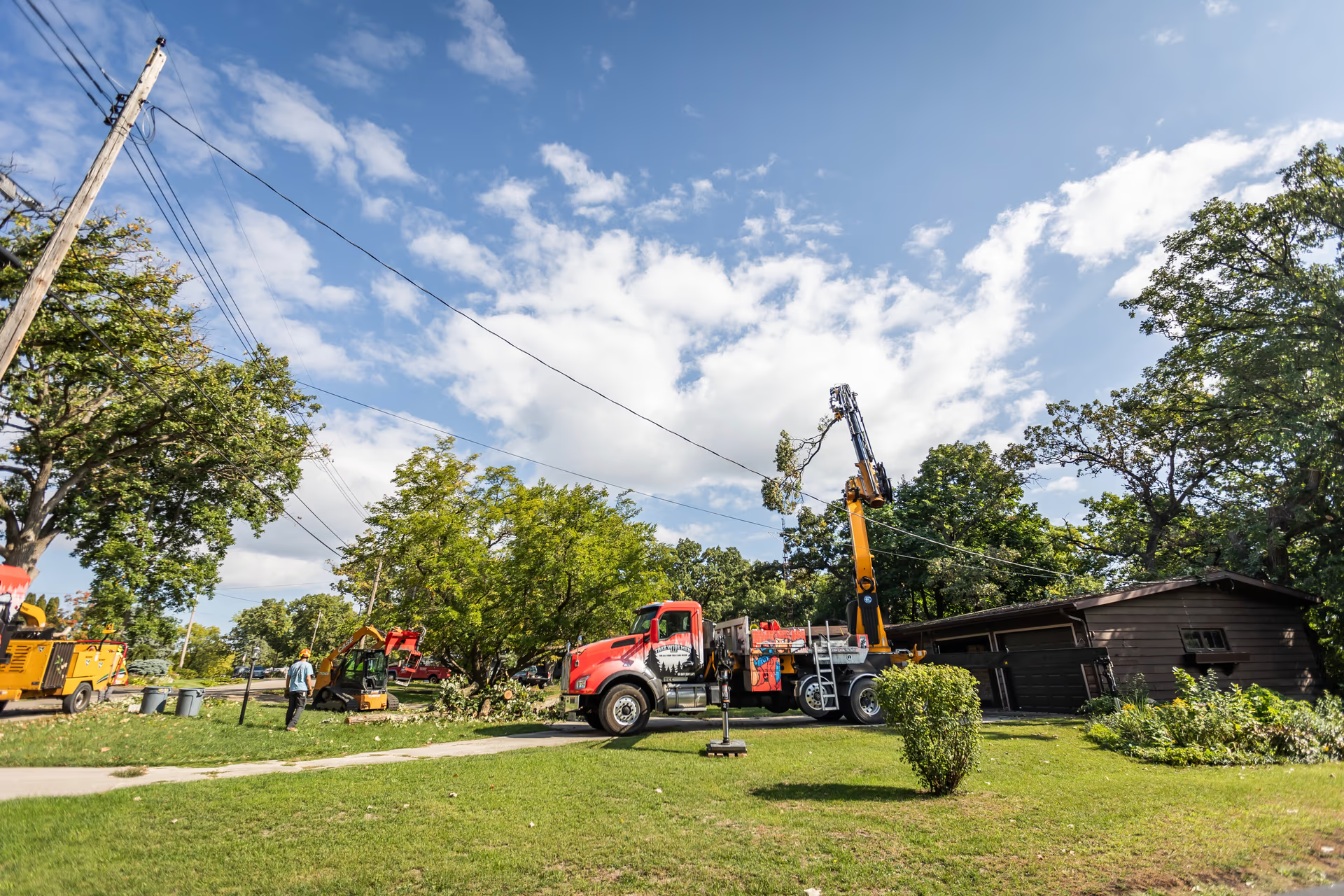
Madison Isthmus Storm Damage Tree Services
Madison's isthmus funnels severe weather between Lakes Mendota and Monona, producing wind speeds that devastate trees across downtown and near-east neighborhoods. Our arborists understand this unique geography and provide both emergency response and preventive care designed specifically for isthmus conditions.
Financing available — low monthly payments
The Isthmus Wind Corridor Explained
Madison's downtown sits on a narrow isthmus — barely one mile wide at its narrowest point — squeezed between Lake Mendota to the north and Lake Monona to the south. This geography creates a natural wind tunnel that significantly amplifies severe weather.
When storms approach from the west or southwest (the prevailing severe weather direction in southern Wisconsin), wind compresses as it funnels through the isthmus. Open water on both sides provides zero friction to slow the wind, and the Venturi effect accelerates gusts as they pass through the narrow corridor.
The result: isthmus neighborhoods experience measurably higher wind speeds than areas just a few miles south in Fitchburg or west in Middleton during the same storm event. This concentrated wind energy causes tree damage patterns unique to the isthmus — more trunk failures, more uprooting, and more widespread canopy damage per storm.
Trees on the isthmus face a compounding problem. Repeated storm exposure weakens wood fiber over time, creating progressive structural decay that makes each subsequent storm more dangerous. Without proactive management, the isthmus canopy degrades faster than surrounding areas.
Lake Fetch Effect
Wind crossing open water (Lake Mendota spans over 5 miles) encounters no friction, arriving at the isthmus shoreline at near-full speed. Trees along the Mendota lakefront — Sherman Ave, Tenney Park, and James Madison Park — absorb the initial impact.
Venturi Acceleration
As the isthmus narrows to barely a mile between the lakes, the Venturi effect compresses air flow, increasing wind velocity. The Capitol Square area and Williamson Street corridor experience some of the highest localized wind speeds in Dane County during storms.
Soil Saturation Factor
Heavy rain often precedes the wind in summer thunderstorms. Madison's clay-heavy lake-bed soils saturate quickly, loosening root anchorage. Combined with amplified isthmus winds, this creates ideal conditions for complete tree uprooting — root ball and all.
Isthmus Neighborhoods Most Affected
These neighborhoods bear the brunt of isthmus storm damage due to their position within the wind corridor and the age and density of their tree canopy.
Tenney-Lapham
Positioned where the isthmus narrows near Lake Mendota, Tenney-Lapham catches accelerating wind off the lake. Mature elms and maples line residential streets, and the combination of age and wind exposure produces frequent storm failures. Tenney Park's lakefront trees take heavy damage in nor'easters.
Marquette & Williamson Street
The Willy St corridor runs directly through the isthmus wind funnel. Dense residential lots with mature silver maples, ashes, and oaks face elevated wind loads from both prevailing westerlies and channeled north-south gusts off the lakes. Atwood Avenue trees are particularly exposed.
Downtown & Capitol Square
Tall buildings around the Capitol create additional turbulence that stresses street trees and terrace plantings. Wind accelerates between buildings and around corners, snapping branches and uprooting younger trees. State Street corridor trees face both natural wind and urban wind effects.
Emerson East & Sherman Ave
Direct exposure to Lake Mendota's north fetch means these neighborhoods take the first hit from storms crossing the lake. Large lakefront properties feature towering oaks and elms that absorb tremendous wind energy. Sherman Ave's mature canopy sees some of the heaviest per-storm damage in Madison.
Schenk-Atwood-Starkweather
East of the Capitol on the isthmus, this neighborhood features mature trees on compact lots. Wind accelerating through the corridor meets dense canopy, producing widespread branch failure during summer thunderstorms. Narrow alleys and tight lot lines make cleanup and prevention more complex.
Near East & Orton Park
Spaight Street, Jenifer Street, and the blocks surrounding Orton Park contain some of the isthmus's oldest and largest trees. The triangular Orton Park itself features heritage oaks that serve as wind collectors during storms. Adjacent homes face elevated risk from these large trees.
Storm Prevention & Emergency Response
The best emergency is the one that never happens. Our arborists provide both proactive storm prevention and rapid response when damage occurs.
Structural Pruning for Wind Resistance
Crown thinning reduces wind resistance (sail area) by selectively removing interior branches, allowing wind to pass through rather than push against the canopy. Crown reduction lowers the center of gravity, reducing leverage that uproots trees. Our arborists target weak branch unions, crossing branches, and deadwood that become projectiles in storms.
Cabling & Bracing Systems
High-strength steel cables connect co-dominant leaders — the split-trunk pattern that is the number one storm failure mode. By preventing independent trunk movement, cables dramatically reduce splitting risk. Through-bolts reinforce existing cracks. For isthmus trees, these systems are among the most cost-effective storm-proofing investments.
Preventive Risk Assessments
Our TRAQ-qualified arborists evaluate every tree on your property for structural defects, species-specific vulnerabilities, and site exposure. You receive a prioritized report ranking each tree's risk level and specific recommendations — remove, cable, prune, or monitor. Isthmus properties benefit from these assessments more than almost any other area in Dane County.
24/7 Emergency Storm Response
When prevention isn't enough and a storm hits, our crews deploy from our Madison office around the clock. We prioritize by severity — trees on homes first — and provide complete cleanup, stump grinding, and insurance documentation. Our local presence means faster response than any company dispatching from outside Dane County.
Local Madison Office for Rapid Response
When a storm rips through the isthmus, response time is everything. Our Madison office at 2909 Landmark Pl enables rapid crew deployment to every isthmus neighborhood — usually within 1 to 3 hours for emergencies.
Call our Madison office at (608) 716-4167 for emergency response or to schedule a preventive storm assessment.
Tree & Property Services Across Madison & Dane County
Explore our other Madison-specific tree care pages — each covers the local permits, species, and neighborhood access that matter for your property.
Isthmus Storm Damage FAQs
Common questions about storm damage on the Madison isthmus.
Why does the Madison isthmus get worse storm damage than surrounding areas?
Madison's isthmus is a narrow strip of land between Lakes Mendota and Monona. When severe weather approaches from the west or southwest, the lakes on either side create a funneling effect that compresses and accelerates wind through the isthmus. Wind speeds on the isthmus can be significantly higher than readings just a few miles away in Fitchburg or Sun Prairie during the same storm event.
Which isthmus neighborhoods experience the most tree damage?
The neighborhoods most affected by isthmus wind funneling include Tenney-Lapham, Marquette, Williamson Street (Willy St), Atwood, and downtown/Capitol Square area. Emerson East and Sherman Ave neighborhoods near the Lake Mendota shoreline also see elevated wind damage due to open lake fetch accelerating winds before they hit the tree canopy.
Can preventive pruning reduce storm damage risk on the isthmus?
Absolutely. Proper structural pruning reduces wind resistance by creating a more aerodynamic canopy and eliminates weak branch attachments that are the first to fail in storms. Trees on the isthmus should be pruned on a shorter cycle — every 3 to 5 years rather than the standard 5 to 7 — due to the elevated wind exposure. Our arborists use crown thinning and reduction techniques that maintain tree health while reducing storm vulnerability.
What types of trees are most vulnerable to isthmus storm damage?
Silver maples are the most storm-vulnerable species on the isthmus due to their brittle wood and tendency to develop co-dominant stems. Siberian elms, box elders, and Bradford pears also fail frequently. Surprisingly, large healthy oaks can uproot in saturated soil conditions, especially during intense summer storms that drop heavy rain before high winds arrive.
How does cabling protect trees from storm damage?
High-strength steel cables installed in the upper canopy connect co-dominant leaders and reduce independent movement during wind events. This prevents the splitting failure pattern common in storms. Combined with proper pruning to reduce sail area, cabling can dramatically reduce storm damage risk. We use ANSI A300 compliant hardware and installation methods for all supplemental support systems.
Do you offer preventive storm assessments for isthmus properties?
Yes. We provide comprehensive risk assessments for isthmus properties that evaluate every tree's structural integrity, species vulnerability, site exposure, and target proximity. The assessment includes prioritized recommendations — which trees need immediate attention, which need pruning on a schedule, and which may be candidates for removal before they fail in a storm.




Protect Your Isthmus Property From Storm Damage
Schedule a preventive storm assessment or call us for immediate emergency response. Our local arborists know the isthmus and its unique wind patterns better than anyone.