
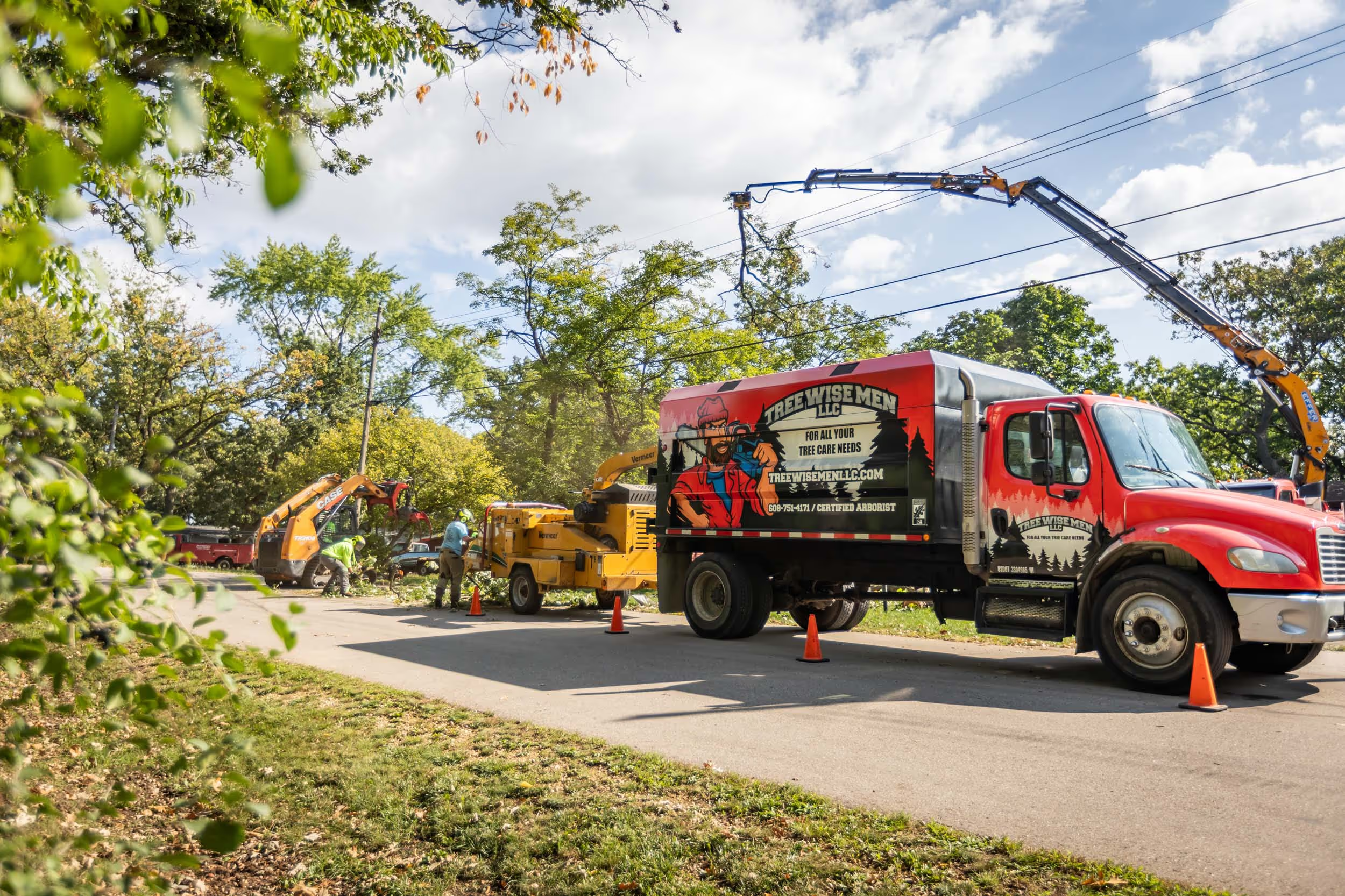
Maple Tree Pruning in Wisconsin
Maples dominate Wisconsin yards — sugar, silver, red, Norway, and Japanese maples are everywhere from old subdivisions to estate properties. Each species has different pruning needs, and silver maple in particular is the highest-failure-rate tree in our service area. This guide covers timing, technique, and the structural-pruning approach that protects mature maples.
Financing available — low monthly payments
Common Wisconsin Maple Species
Different maples have very different structural characteristics, pruning needs, and lifespan. Knowing your species shapes the care plan.
Sugar Maple (Acer saccharum)
Wisconsin's state tree and the source of maple syrup. Slow-growing, long-lived (200+ years), with strong wood and good structure. Brilliant orange-red fall color. Common in older Madison and Janesville neighborhoods. Prefers slightly acidic soil; can struggle on Wisconsin's alkaline urban soils. Worth preserving and structurally pruning every 5–7 years.
Silver Maple (Acer saccharinum)
Fast-growing but brittle. Weak branch unions split in storms. Massive root systems lift sidewalks and invade sewers. Common in 1950s–1980s subdivisions across Rock and Dane counties. Many mature silver maples are now reaching the failure window. Annual structural inspection and proactive pruning are critical; ultimately many need to come down.
Red Maple (Acer rubrum)
Moderate growth rate, decent structure if pruned correctly when young. Brilliant red fall color (best of any Wisconsin tree). Most-planted street tree in Madison and many Wisconsin cities. Tolerates wet soils. Generally trouble-free with periodic pruning. The right species for new plantings where you used to plant ash.
Norway Maple (Acer platanoides)
Hardy, dense canopy that creates deep shade and prevents grass growth underneath. Considered invasive in Wisconsin and not recommended for new plantings. Existing Norway maples are structurally OK but tend to be over-planted in older neighborhoods. Pruning to reduce density helps lawn underneath; otherwise standard maintenance.
Japanese Maple (Acer palmatum)
Small ornamental maple prized for delicate leaf shape and dramatic fall color. Many cultivars: laceleaf, upright, weeping forms. Cold-sensitive — protect from harsh Wisconsin winters with siting on the east side of buildings. Prune lightly and selectively in late winter to maintain natural form. A specimen tree, not a shade tree.
Boxelder (Acer negundo)
Native maple with compound leaves. Fast-growing, weedy, short-lived. Often comes up volunteer along fences and in disturbed areas. Brittle wood, prone to storm breakage. Most boxelders in landscape settings are eventually removed. If you have one, structural pruning helps; replacement with a better species is usually the right long-term call.
Maple Pruning Types We Perform
Crown Cleaning
Removal of dead, dying, diseased, and broken branches throughout the canopy. The most common and most important pruning type for maples — silver and red maples shed substantial deadwood every year. Recommended every 3–5 years for mature shade maples.
Structural Pruning (Young Trees)
The single highest-leverage maple intervention. Correcting weak unions, co-dominant stems, and poor branch architecture in young maples (3–15 years old) prevents the storm-failure problems that plague mature silver maples. Cheap when the tree is young, impossible to fix when mature.
Crown Reduction (Mature Trees)
For mature maples that have outgrown their space or have weak unions that need wind-load reduction. Done correctly, reduces canopy size and storm risk while preserving the tree's natural form. Critical: never let anyone "top" a maple — topping creates worse structural problems than it solves.
Cabling and Bracing
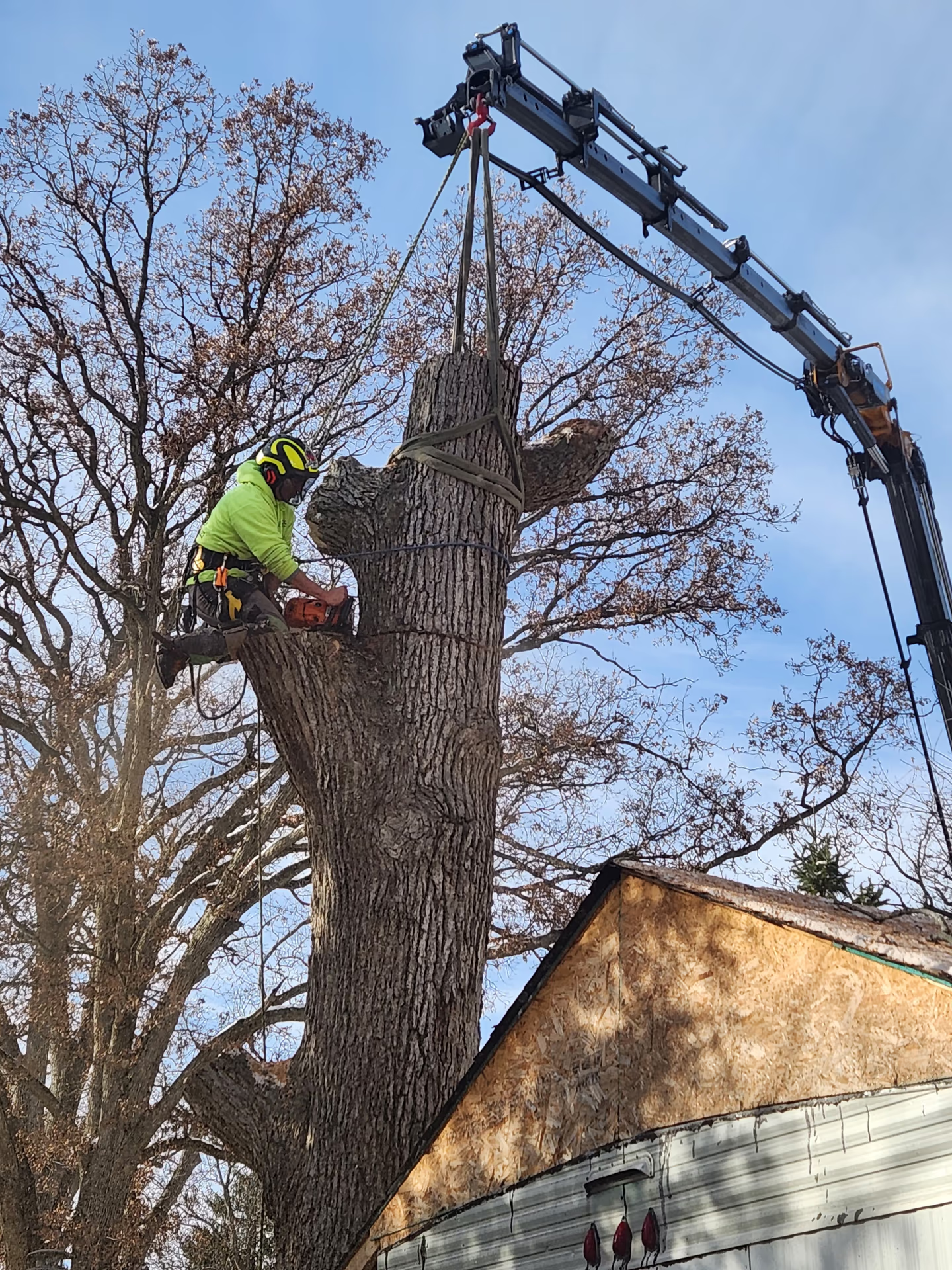
Steel or synthetic cables installed high in the canopy to redistribute load between weak unions on otherwise-healthy mature maples. Common on large silver maples with co-dominant stems. Extends safe tree life by 10–30 years on the right candidates. Often paired with crown reduction.
Special Note on Silver Maples
If you have a mature silver maple within striking distance of your house, garage, or any structure you care about, this section is for you. Silver maples were planted by the millions across Wisconsin in the post-WWII subdivision boom because they grow fast and provide quick shade. Now those trees are 50–80 years old, and we respond to silver maple failures every storm season.
The failure pattern is predictable: a co-dominant stem with included bark splits during a wind event. Half the tree falls. Often it lands on something expensive. The signs are visible years before the failure — V-shaped trunk crotches with bark inclusion, large branches reaching far from the trunk, deadwood throughout the canopy, sometimes fungal conks at the base.
What to do: if you have a mature silver maple near your house, get it assessed. Annual structural pruning can extend safe life. Cabling can help. But honestly, for many silver maples within 50 feet of a house, proactive removal and replacement with a better species is the right long-term call. Our arborists give straight answers — no scare tactics, no over-selling.
Related Tree Care Guides
Tree Trimming Services
ANSI A300 pruning by ISA Certified Arborists.
Cabling & Bracing
Structural support for split-prone silver maples.
Structural Pruning
High-leverage pruning for young maples to prevent future problems.
Crown Reduction
Proper canopy reduction for over-large maples (never topping).
Oak Tree Care
Care for Wisconsin's heritage oaks.
Ash Tree Treatment
EAB protection — many properties have both ash and maple.
Roots Damaging Foundation
Silver maple is the #1 root-damage culprit in Wisconsin yards.
Seasonal Care Calendar
Month-by-month care schedule for Wisconsin trees.
Maple Tree Pruning FAQs
When is the best time to prune a maple tree in Wisconsin?
Late winter (February through early March) is the ideal window for most maple pruning in Wisconsin. The tree is still dormant, branch architecture is fully visible, and disease and pest pressure is low. Avoid pruning maples during peak sap flow in late winter and early spring (when buds are swelling) — cuts will bleed heavily, which is unsightly though not actually harmful to the tree. Mid-summer (July) is a secondary acceptable window for minor work. Avoid heavy pruning in late summer or fall, which can stress the tree heading into winter.
Why do silver maples cause so many problems in Wisconsin yards?
Silver maple (Acer saccharinum) is the most failure-prone tree in many Wisconsin yards. It grows very fast — which means the wood is brittle, branch unions are weak, and large mature trees are notorious for splitting and dropping huge limbs in storms. Silver maples are also notorious for invasive roots that lift sidewalks, crack foundations, and invade sewer lines. Many silver maples were planted in 1950s–1980s subdivisions because they were cheap and fast — the bill is coming due now. Proactive structural pruning extends safe life; ultimately many silver maples need to come down.
Can I tap my maple trees for syrup?
Yes — sugar maple (Acer saccharum) and to a lesser extent silver maple, red maple, and Norway maple can all be tapped for sap that's boiled down to syrup. Sugar maples produce the highest sugar content (about 2-3% sugar) and the best-flavored syrup; the others are typically used commercially for blending. Tapping is done in late February through early April when daytime temperatures are above freezing and nights are below freezing. Healthy mature maples (over 12 inches diameter) can be tapped without harm if done correctly. Many Wisconsin homeowners with mature sugar maples tap a few trees recreationally each spring.
What's the difference between sugar maple, silver maple, and red maple?
Sugar maple has 5-lobed leaves with smooth (not toothed) edges between lobes, gray bark, and pale yellow-orange-red fall color. The premium maple for syrup and a slow-growing, long-lived shade tree. Silver maple has deeply-cut, almost lacy leaves with silvery-white undersides, bark that becomes shaggy with age, and rapid growth (often planted in older subdivisions). Brittle wood, weak unions, invasive roots — the problem maple. Red maple has 3- to 5-lobed leaves with toothed edges, gray bark with light patches, and brilliant red fall color. Moderate growth rate and structurally better than silver maple. The most-planted street tree in much of Wisconsin.
What problems affect maple trees in Wisconsin?
The big ones: tar spot (cosmetic black spots on leaves, harmless), verticillium wilt (a fungal disease causing branch dieback that can kill trees), maple decline (slow long-term decline often linked to soil compaction and root damage), squirrel and sapsucker damage (cosmetic but unsightly), Asian longhorned beetle (not yet widespread in Wisconsin but a serious threat), and storm damage on weak silver maples. Most maples in Wisconsin do well with regular pruning and good soil management. Verticillium wilt is the most serious disease — there's no cure, only management to extend life and prevent spread.
How much does maple tree pruning cost in Wisconsin?
Maple pruning in Wisconsin typically ranges from $250 for small ornamental maples (Japanese maple, smaller red maples) to $1,200+ for large mature shade maples needing crown reduction or structural pruning. Cost factors are size, scope (crown cleaning vs. crown reduction vs. structural pruning), access difficulty, and whether crane work is needed for large specimens. Annual pruning programs typically run $400–$800 per year for a property with 2–4 mature maples. We provide free on-site estimates with detailed scope of work.
Should I have my mature silver maple removed before it causes problems?
Possibly — but it depends on the specific tree. A healthy silver maple in an open location away from structures can live 100+ years and be reasonably safe with periodic structural pruning. A silver maple within striking distance of your house, with weak co-dominant stems or visible decay, is a different story — those trees fail catastrophically and the cost of waiting can be much higher than proactive removal. Our ISA Certified Arborists can assess your specific tree and tell you honestly whether it's a manage-and-monitor situation or a remove-now situation.
Schedule Maple Pruning
From sugar maple syrup taps to mature silver maple structural assessments, our ISA Certified Arborists handle the full range of maple care across Southern Wisconsin. Free on-site estimates.