
Tree Care Best Practices From Certified Arborists
Proper tree care protects your investment, keeps your property safe, and ensures your trees thrive for generations. Learn the professional techniques and standards that certified arborists follow every day.
Why Proper Tree Care Matters
Trees are the most valuable living assets on your property. A single mature tree can increase your home's value by $1,000 to $10,000, provide energy savings of up to 25% on cooling costs, and improve air quality for your entire neighborhood.
But trees aren't maintenance-free. Without proper care, trees become stressed, diseased, and structurally dangerous. The difference between a tree that thrives for 100 years and one that fails prematurely almost always comes down to how it was cared for.
At Tree Wise Men LLC, we follow ANSI A300 standards for every tree care operation. These nationally recognized standards ensure your trees receive science-based care — not guesswork, shortcuts, or outdated practices.
Property Value
Well-maintained trees increase curb appeal and property value. Neglected or poorly pruned trees do the opposite.
Safety
Regular inspections and proper pruning prevent branch failures that can damage homes, cars, and injure people.
Tree Longevity
Proper watering, mulching, and pruning help trees live decades longer and resist disease and storm damage.
Structural Integrity
Correct pruning promotes strong branch attachment and balanced canopy structure from a young age.
Pruning Best Practices: ANSI A300 Standards
Professional tree pruning follows the ANSI A300 standard — the accepted industry benchmark for tree care operations. Here's what proper pruning looks like and what to avoid.
Proper Pruning Cuts
Every cut should be made just outside the branch collar — the slightly swollen area where the branch meets the trunk. This allows the tree to compartmentalize the wound and heal efficiently.
When to Prune
Most trees are best pruned in late winter while dormant. Flowering trees should be pruned right after they bloom. Dead or hazardous branches can be removed any time. Oaks should never be pruned April through October.
Crown Thinning
Selective removal of branches throughout the canopy to increase light penetration and air movement. Done correctly, it reduces wind resistance without changing the tree's natural shape.
Crown Raising
Removing lower branches to provide clearance for pedestrians, vehicles, buildings, or sightlines. Should be done gradually and never remove more than 25% of the living canopy.
Crown Reduction
Reducing the overall size of a tree by cutting branches back to lateral branches that are at least one-third the diameter of the branch being removed. This is the correct alternative to topping.
Structural Pruning
The most important pruning for young trees. Establishes a strong central leader, eliminates codominant stems, and corrects structural defects before they become dangerous.
Common Tree Care Mistakes to Avoid
These harmful practices are still performed by unqualified tree companies. If anyone recommends these for your trees, find a different company.
Tree Topping
Cutting main branches back to stubs. This is the most destructive thing you can do to a tree. It causes rapid, weakly attached regrowth, massive decay, increased liability, and often kills the tree within 5-10 years. No qualified arborist will ever recommend topping.
Flush Cuts
Cutting a branch flush with the trunk, removing the branch collar. This destroys the tree's natural defense zone and creates a wound the tree cannot properly compartmentalize. The result is extensive internal decay.
Lion Tailing
Stripping all interior branches and leaving foliage only at the tips. This concentrates weight at branch ends, increases the risk of breakage, and removes the tree's ability to dampen wind movement. A properly thinned canopy retains interior branching.
Improper Mulching
Piling mulch against the trunk ('volcano mulching') holds moisture against the bark, promotes decay, encourages circling roots, and creates habitat for rodents. Mulch should be 2-4 inches deep and pulled back several inches from the trunk.
Over-Pruning
Removing more than 25% of a tree's living canopy in one season. This starves the tree of its ability to produce food through photosynthesis, triggering stress responses like excessive sprouting and weakened disease resistance.
Wound Dressings & Tree Paint
Applying sealants or paint to pruning cuts. Research consistently shows these products do not prevent decay and may actually interfere with the tree's natural healing process. Proper cuts at the branch collar are all that's needed.
Watering & Mulching Best Practices
Proper Watering
- Water deeply and infrequently rather than shallow daily watering. Deep watering encourages deep root growth.
- Newly planted trees need 2-3 deep waterings per week during the first growing season.
- Established trees benefit from weekly deep watering during drought — apply water at the drip line, not at the trunk.
- Water in the early morning to reduce evaporation. Avoid watering late in the evening to prevent fungal issues.
- A general rule: provide 10 gallons of water per inch of trunk diameter per watering session.
Proper Mulching
- Apply 2-4 inches of organic mulch (wood chips or shredded bark) over the root zone.
- Keep mulch 3-6 inches away from the trunk — never pile it against the bark.
- Extend the mulch ring as wide as practical — ideally to the drip line or at least 3-4 feet from the trunk.
- Replenish mulch annually as it decomposes. Don't pile new mulch on top of old without checking depth.
- Mulch conserves moisture, regulates soil temperature, suppresses weeds, and adds organic matter as it breaks down.
When to Call a Professional Arborist
Some tree care tasks are safe for homeowners. Others require professional training, equipment, and insurance. Here's when to call Tree Wise Men LLC.
20+ ft
Any pruning above 20 feet or requiring a ladder
Power Lines
Any branch near or touching utility lines
Large Trees
Removals or pruning on trees over 8 inches diameter
Disease
Suspected disease, pest infestation, or structural defects
Tree Care FAQs
When is the best time to prune trees in Wisconsin?
The best time to prune most trees in Wisconsin is late winter (February-March) while they're still dormant. This minimizes stress and disease risk. However, dead or hazardous branches can be removed any time of year. Oaks should only be pruned from November through March to prevent oak wilt.
How much of a tree can I prune at once?
Never remove more than 25% of a tree's living canopy in a single year. Removing too much foliage stresses the tree and can trigger excessive sucker growth or decline. A certified arborist can determine the right amount for your specific tree.
Is tree topping ever acceptable?
No. Tree topping is one of the most harmful practices in tree care. It creates weak, decay-prone regrowth, destroys the tree's natural structure, and dramatically increases the risk of branch failure. Proper crown reduction or thinning are the correct alternatives.
Should I paint tree wounds or pruning cuts?
No. Research has shown that wound dressings and pruning paints do not prevent decay and can actually slow the tree's natural healing process. Proper pruning cuts made at the branch collar allow the tree to compartmentalize and heal on its own.
How often should I water newly planted trees?
Newly planted trees need deep watering 2-3 times per week for the first growing season. After establishment (1-2 years), reduce to weekly deep watering during dry periods. Always water slowly and deeply — a soaker hose or drip system for 30-60 minutes is ideal.
Can I do my own tree pruning or should I hire a professional?
Minor pruning of small branches within reach from the ground is generally fine for homeowners. However, any pruning that requires a ladder, involves branches near power lines, or requires work on large mature trees should be done by a certified arborist with proper equipment and training.
Related Tree Care Guides
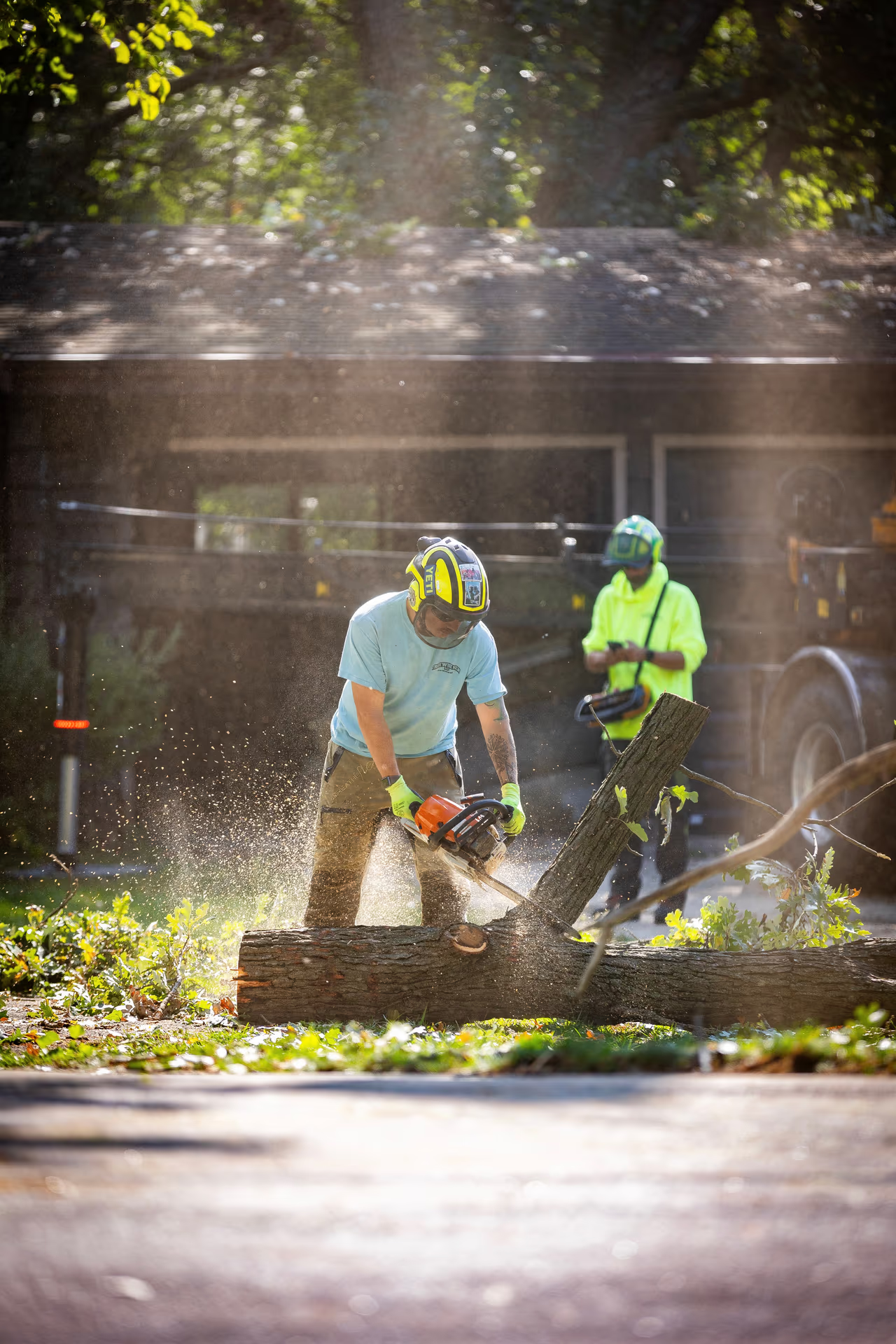
Best practices in action — how seasonal timing, disease management, and assessment programs translate to actual tree care work on Wisconsin properties.
Seasonal Care Calendar
Month-by-month tree care schedule for Wisconsin homeowners.
Tree Health & Disease Guide
Common Wisconsin tree pests, diseases, and treatment options.
When to Remove a Tree
How proper care extends tree life — and when it's no longer enough.
Plant Health Care
Soil health, fertilization, and disease prevention programs.
Tree Health Assessment
TRAQ-methodology assessments by ISA Certified Arborists.
Arborist Services
Full-spectrum arboricultural care for residential properties.
Oak Wilt Prevention
Why pruning timing matters for oaks in Rock County.
Emerald Ash Borer
Treatment vs. removal decisions for ash trees in Wisconsin.



Get Professional Tree Care You Can Trust
Stop guessing and start getting expert tree care from certified arborists. Tree Wise Men LLC follows ANSI A300 standards on every job — your trees deserve nothing less.