
When to Remove a Tree: Signs It's Time
Not every tree can or should be saved. Knowing when a tree has become a liability rather than an asset protects your property, your family, and your wallet. Here are the signs a certified arborist looks for.
Signs Your Tree Needs Removal
These warning signs indicate that a tree may be beyond saving and could pose a serious risk to your property and safety. If you notice any of these, schedule a professional assessment.
Dead Branches Exceeding 25% of Canopy
When more than a quarter of a tree's canopy is dead, the tree is in severe decline. Dead branches fall without warning — the more dead wood, the higher the risk of property damage or injury. Large dead branches over living spaces are especially dangerous.
Trunk Decay & Cavities
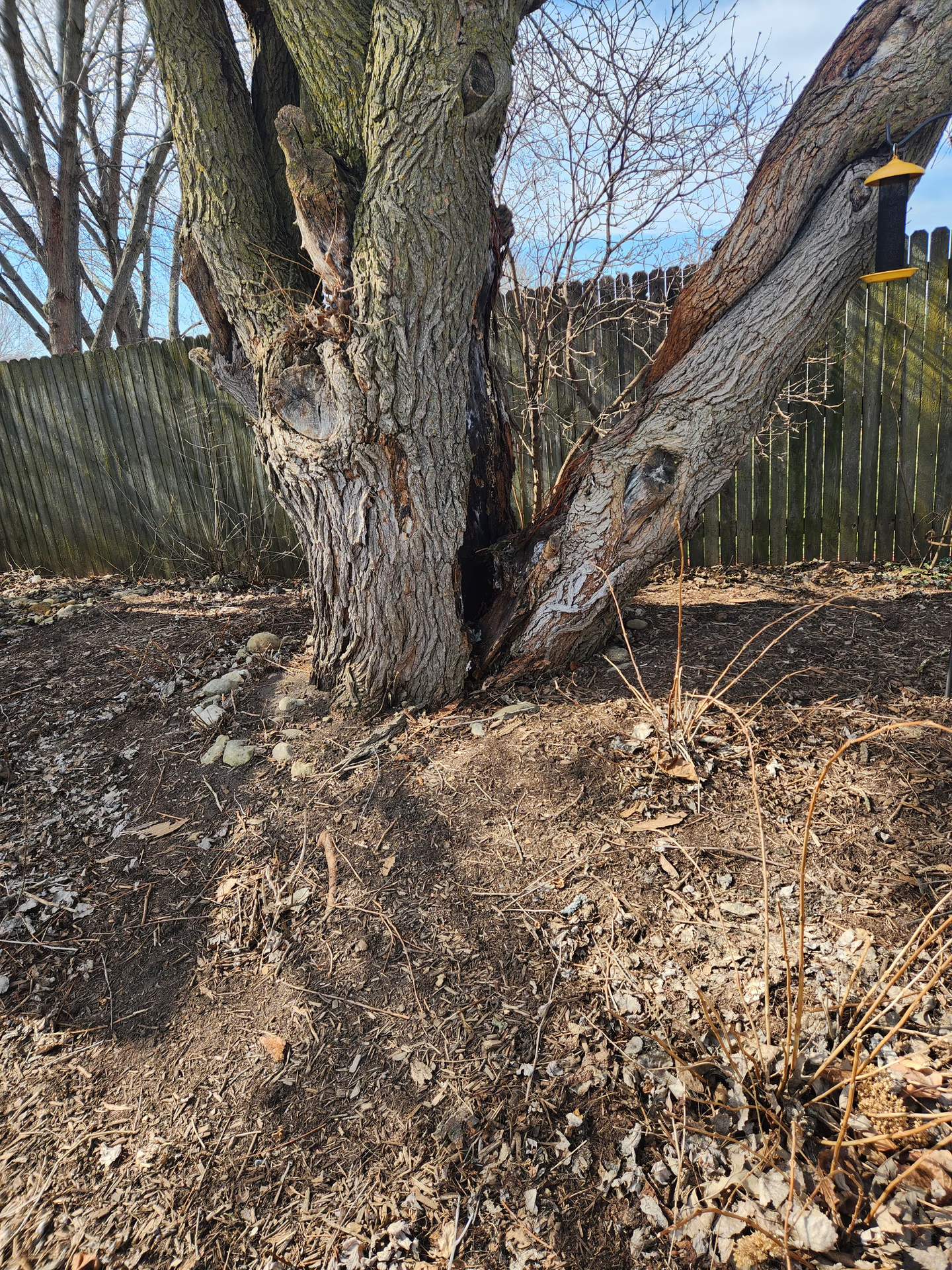
Fungal conks (mushrooms) growing from the trunk, large cavities, soft or crumbling bark, and seeping wounds all indicate internal decay. A tree can appear healthy on the outside while being hollow inside — these trees fail catastrophically without warning.
Significant or Sudden Lean
A tree that has recently started leaning — especially with soil heaving or cracking at the base — is experiencing root failure. This is one of the most dangerous conditions because the entire tree can topple. A sudden lean after a storm requires immediate professional assessment.
Root Damage & Soil Issues
Construction damage to roots, grade changes, severed roots from trenching, soil compaction, or root rot can all compromise a tree's stability. If more than 30-40% of the root system is damaged, the tree may not be savable and becomes a fall risk.
Severe Storm Damage
A tree that has lost more than 50% of its canopy to storm damage, or has a split trunk or major scaffold limbs torn away, rarely recovers to a safe condition. The structural damage creates permanent weak points that are prone to future failure.
Proximity to Structures
A tree growing too close to your home, foundation, sewer lines, or power lines may need removal if it cannot be safely managed through pruning alone. Root intrusion into foundations and sewer systems causes thousands of dollars in damage.
Can the Tree Be Saved?
Not every problem means removal. A certified arborist can often treat or manage tree issues. Here's how we evaluate whether a tree is worth saving.
Often Savable
Minor dead wood (under 15% of canopy), early-stage disease, minor storm damage, insect infestations caught early, and trees that need structural pruning or cabling to correct defects.
Borderline — Needs Assessment
Moderate canopy dieback (15-25%), small trunk cavities, codominant stems with included bark, root damage from minor construction, and chronic but slow-progressing diseases.
Usually Requires Removal
Major trunk decay, sudden lean with root plate movement, more than 50% canopy loss, advanced root rot, trees within falling distance of structures with multiple defects, and severe storm damage to the main scaffold.
The Cost of Waiting Too Long
Delaying a necessary tree removal doesn't save money — it costs more. Here's why planned removal is always cheaper and safer than waiting for an emergency.
40-60%
More expensive for emergency removal vs. planned removal
$15K+
Average cost of tree-related property damage claims
$1M+
Potential liability if a known hazard tree injures someone
72 hrs
Typical wait time for emergency service after a major storm
Our Tree Removal Process
When removal is the right decision, Tree Wise Men LLC follows a systematic process to ensure safety and protect your property.
Assessment & Estimate
A certified arborist evaluates the tree, identifies hazards, plans the removal approach, and provides a detailed written estimate — free of charge.
Site Preparation
We establish drop zones, protect landscaping and structures, set up rigging if needed, and coordinate with utilities if power lines are involved.
Safe Removal
Using industry-standard techniques — sectional dismantling, rigging, and crane-assisted removal when needed — we take the tree down safely and efficiently.
Complete Cleanup
All wood and debris are removed. We offer stump grinding and can leave firewood-length logs if you want them. The site is raked and left clean.
Tree Removal FAQs
How do I know if my tree is dead or just dormant?
Scratch a small section of bark on a branch with your fingernail. If the layer underneath (cambium) is green and moist, the branch is alive. If it's brown and dry, the branch is dead. Try multiple branches — if all are dead, the tree is likely dead. A certified arborist can confirm with a thorough assessment.
Can a leaning tree be saved?
It depends on the cause. A tree that has always grown at an angle is structurally adapted and usually fine. A tree that has recently started leaning — especially after a storm or with heaving soil on one side — indicates root failure and is extremely dangerous. This requires immediate professional assessment.
How much does tree removal cost compared to emergency removal?
Planned tree removal typically costs 40-60% less than emergency removal. Emergency calls require immediate crew mobilization, overtime labor, and often more complex operations due to storm damage. A planned removal can be scheduled, staged safely, and completed far more efficiently.
Is it cheaper to keep treating a sick tree or remove it?
In many cases, ongoing treatment of a severely declining tree costs more over time than a single planned removal and replacement. If a tree has less than a 50% chance of recovery after 2-3 years of treatment, removal is usually the more cost-effective choice.
Do I need a permit to remove a tree on my property?
In most areas of Southern Wisconsin, you do not need a permit to remove trees on your own private property. However, some municipalities have ordinances protecting certain trees, especially in historic districts or near waterways. Tree Wise Men LLC can help you check local requirements before scheduling removal.
What happens to the stump after tree removal?
We offer stump grinding as part of our removal services. The stump is ground 6-12 inches below grade, and the resulting wood chips can be used as mulch or removed. We then backfill the hole and leave the area ready for replanting or landscaping.
Related Removal Decision Guides
Specific scenarios that change the calculus on whether to keep or remove a tree — from active hazards to root damage to storm survivors.
Tree Leaning Toward My House
Triage framework for leaning trees — call now or schedule?
A Tree Fell on My House
Active emergency steps and insurance walkthrough.
Cracked Tree Trunk
Save-vs-remove decision matrix for storm-damaged trunks.
Roots Damaging Foundation
When removal is required vs. when a barrier or root pruning works.
High Risk Tree Removal
Process for removing trees close to structures.
Tree Removal Services
Our complete tree removal process and equipment.
Tree Removal Cost Guide
What removal actually costs and what drives the price.
Storm Damage Recovery
Complete guide to post-storm tree damage in Wisconsin.



2026 guide
Sometimes cabling is enough. What a support system costs in Southern Wisconsin, and when removal is the kinder answer.
Not Sure If Your Tree Needs Removal?
Get a free, no-obligation assessment from a certified arborist. We'll tell you honestly whether your tree can be saved or if removal is the safer and smarter option.