
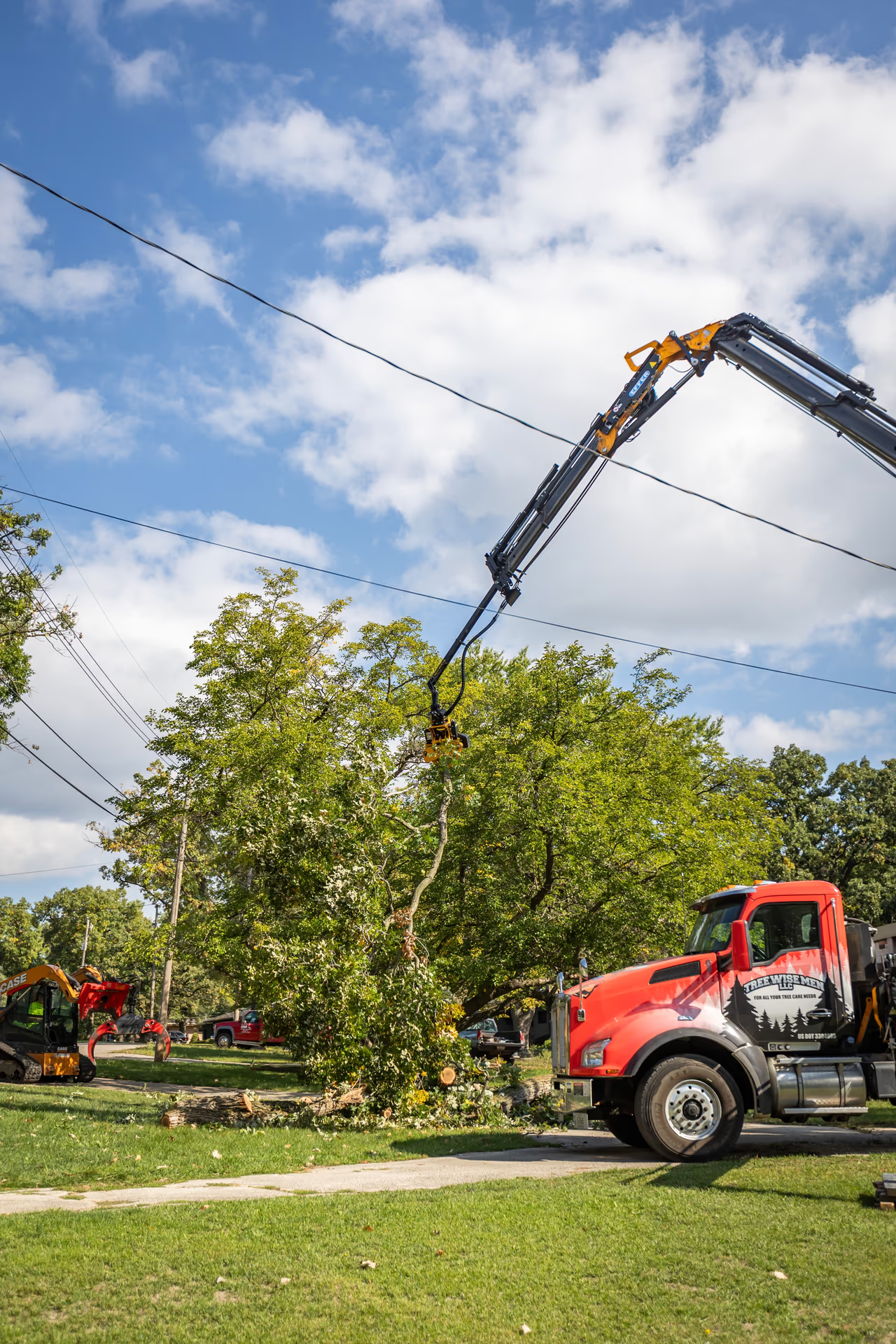
Dead Tree Near a Power Line?
A dead tree within falling distance of any energized line is a wildfire and electrocution risk. Below is how to figure out whose responsibility it is, who to call first, and how we handle utility-coordinated removals safely across Wisconsin.
We coordinate directly with Alliant Energy, MGE, We Energies, and the rural electric cooperatives.
Critical Safety Rules
- •Stay at least 35 feet from any tree in contact with a power line — it may be energized along its full length.
- •Do not cut, prune, or attempt to remove any tree within 10 feet of an energized line. This is an OSHA-regulated activity requiring qualified line clearance arborists.
- •If a line is down or sparking, call 911 first, then your utility's emergency line.
- •Wood is a poor insulator when wet. Even a dry-looking dead tree can conduct enough current to kill if it bridges to the ground.
Whose Responsibility Is It?
Most homeowners assume any tree near a wire is the utility's problem. The reality is more nuanced.
Utility's Responsibility
- Trees inside the utility's right-of-way along distribution or transmission lines
- Trees that have grown into the cleared corridor along utility poles
- Trees that pose immediate hazards to bulk infrastructure (substations, transmission towers)
- Service-side of the meter, in some cases — varies by utility
Homeowner's Responsibility
- Trees on your property near service drops to your house
- Ornamental and shade trees that have grown toward lines but were planted by you or a previous owner
- Trees outside the utility right-of-way even if they could fall into the corridor
- Stump grinding and final cleanup after utility removes the tree
Wisconsin Utility Contacts
Call the appropriate utility to report a hazard tree in their right-of-way. They'll send a forester to assess and schedule removal — typically at no cost to you.
Alliant Energy
Most of Rock County, parts of Dane and Jefferson
Madison Gas & Electric (MGE)
Madison metro and surrounding Dane County
We Energies
Walworth County and parts of Jefferson County
Rock Energy Cooperative
Rural Rock and Walworth counties
Adams-Columbia Electric Cooperative
Northern Dane and Adams counties
Other / Unknown
If unsure, check your electric bill or look up your address at puc.wisconsin.gov
Other Tree Hazard Situations
Tree Leaning Toward My House
Triage framework and 5-minute self-assessment for leaning trees.
A Tree Fell on My House
First-15-minutes emergency walkthrough and insurance steps.
Cracked Tree Trunk After a Storm
Save vs. remove decision tree for storm-damaged trunks.
Tree Roots Damaging My Foundation
When to remove vs. root prune vs. install a barrier.
High Risk Tree Removal Near Homes
Our process for removing dangerous trees close to structures.
Emergency Tree Services
Our 24/7 storm response and utility coordination capabilities.
Power-Line Tree FAQs
Whose responsibility is a tree near a power line?
It depends on which line and where the tree is. Service drops (the line from the pole to your house) and trees on your property near distribution lines are usually your responsibility. Trees in the utility right-of-way (often a 30-foot corridor along distribution and transmission lines) are the utility's responsibility, and they'll typically remove or trim them at no cost. Call your utility first — they'll send a forester to inspect and determine jurisdiction. If it's yours, we coordinate with the utility for safe removal.
Can I cut down a tree near a power line myself?
No, and Wisconsin law and OSHA standards prohibit it for non-qualified workers. Trees within 10 feet of an energized line require a qualified line clearance arborist with specific PPE, training, and equipment. Even "dead" trees can have branches that contact lines as they fall, energizing the entire tree. Every year homeowners in Wisconsin are seriously injured or killed attempting DIY removal of trees near lines. The utility will de-energize the line for free if needed for an authorized removal.
Who pays for tree removal in the utility right-of-way?
The utility pays — for distribution lines (the smaller poles along streets) and transmission lines (the big steel towers), Alliant Energy, MGE, We Energies, and the rural electric cooperatives all maintain vegetation programs that remove or trim hazard trees in their corridors at no cost to property owners. Contact your utility's vegetation management department to report the hazard. They typically respond within a few weeks for non-emergency situations and same-day for active hazards.
What's the safe distance between a tree and a power line?
For service drops to a house, branches should be at least 10 feet from the wire in any direction. For distribution lines (3-phase street lines), the utility maintains a 15- to 30-foot clear zone depending on voltage. Transmission lines (the high-voltage steel tower lines) maintain a 50- to 75-foot clear zone. A dead tree within twice its height of any energized line should be reported to the utility immediately — wind can drop it through the lines and start a fire or send live current to the ground.
Can a tree start a wildfire by falling on a power line?
Yes, and it's the cause of many Wisconsin wildfires every year. When a dead or dying tree contacts an energized line, the resulting arc can ignite dry grass, leaves, or the tree itself. Recent Wisconsin wildfires in Marinette, Adams, and Jackson counties were started this way. If you have a dead tree within falling distance of any utility line, treat it as urgent — call the utility (or us, and we'll coordinate) before the next storm.
How does utility-coordinated removal work?
We schedule the removal with the utility ahead of time. On the day of work, the utility either de-energizes the line, installs protective covers, or stations a qualified line clearance crew on-site. Our crew uses non-conductive ropes, fiberglass tools, and insulated bucket trucks rated for the line's voltage. The whole job takes longer than a normal removal — typically a half day for a single tree — but it's the only safe way to do this work. Cost is comparable to a normal hazard removal.
Dead Tree Near a Line? We'll Coordinate.
We'll assess the tree, identify which utility owns the corridor, and either coordinate utility removal or perform a utility-supervised removal ourselves. No DIY guesswork.