
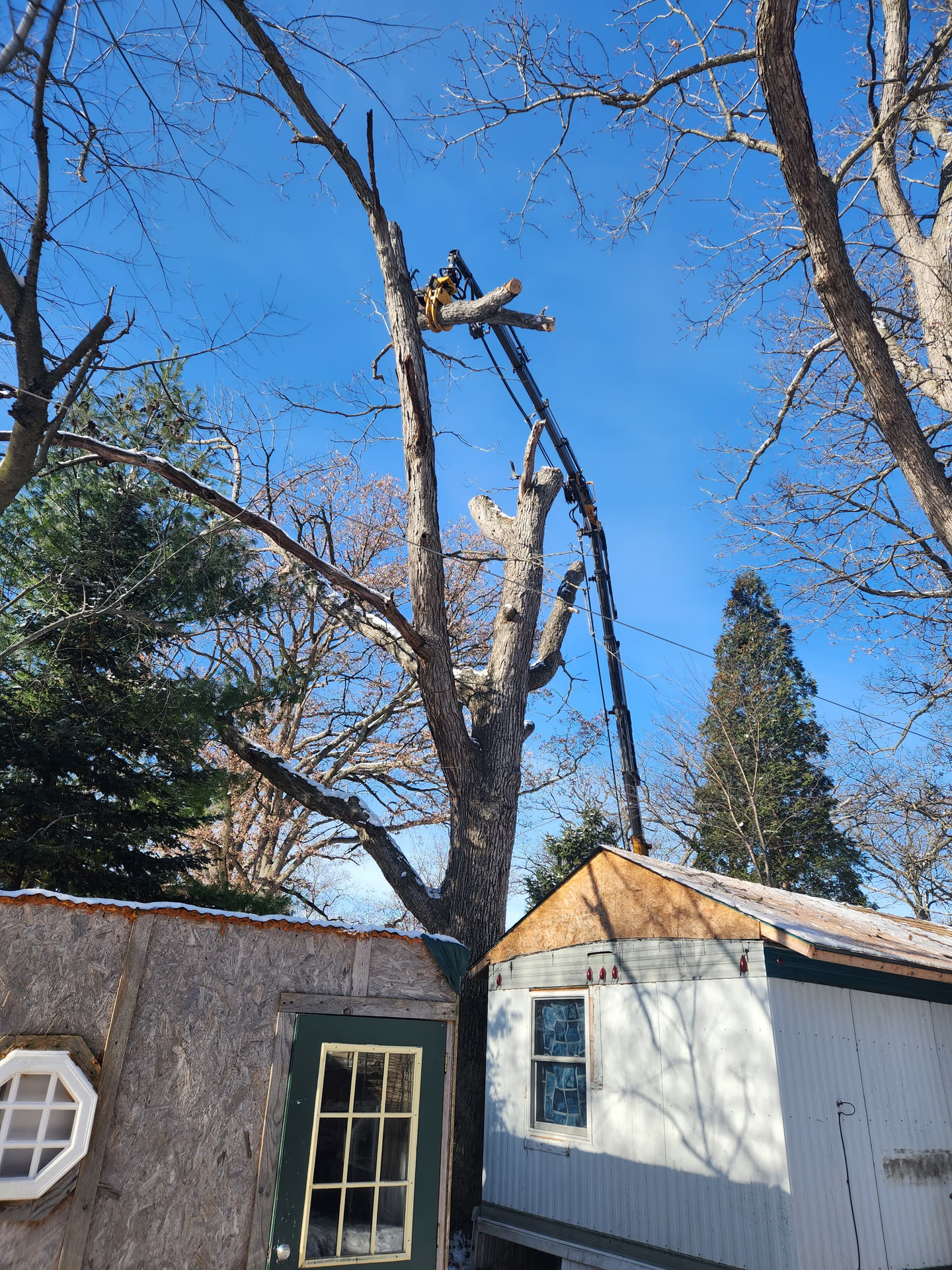
A Tree Fell on Your House — Here's What to Do
Stay calm, get clear of the affected area, and read the first 15 minutes below. Then call us — our 24/7 emergency line dispatches a crew within the hour across Rock County, Dane County, and surrounding areas in Southern Wisconsin.
Active emergency response 24/7 during storm events. We bill insurance directly when possible.
The First 15 Minutes
In order. Don't skip steps — each one is there because we've seen what happens when it's missed.
- 1
Account for everyone
Make sure every person and pet is accounted for and out of the affected area. If anyone is hurt or trapped, call 911 immediately.
- 2
Check for downed power lines
Look at the roof, the tree, and the surrounding yard for any utility lines. If you see one, assume it's live and energized — keep everyone 35 feet away and call the utility (Alliant Energy 1-800-862-6222 or MGE 608-252-7222) before doing anything else.
- 3
Check for gas smell or leaks
If you smell gas, shut off the supply at the meter if you can do so safely, evacuate, and call 911 plus the gas utility. If you can't safely reach the meter, evacuate and call from outside.
- 4
Move out of the impact zone
If the tree is still attached to other branches, partially supported, or hanging, it can shift further. Don't go under or near it. Don't try to retrieve belongings yet.
- 5
Photograph everything
Take wide shots of the tree on the house, close-ups of any damage, the tree base where it broke or uprooted, and the entire impact zone. These photos protect your insurance claim. Take them before anyone moves anything.
- 6
Call us at (608) 751-4171
Our 24/7 emergency line dispatches a crew with the equipment to make the property safe — temporary tarping, controlled removal of the tree from the structure, and stabilization of any compromised framing. We document everything for your insurance claim.
Things You Should Not Do
These mistakes turn a fixable situation into a life-threatening one. We see them every storm season.
Do not touch a tree near power lines
If any part of the tree is touching a utility line — even a service drop to your house — it can be energized along its entire length. Wood is a poor insulator when wet. People die from this every year. Call the utility first and wait.
Do not try to cut the tree yourself
Trees on houses are under tension and compression you can't see from the ground. Cutting the wrong piece releases stored energy unpredictably — common chainsaw injuries during DIY emergency removal include kickback, crushed limbs, and being thrown by the tree as it shifts.
Do not climb on the roof to inspect
Roof structures hit by trees often have hidden damage to trusses and decking. The visible damage might be 10% of the actual structural compromise. Wait for a professional assessment before adding any weight to the roof.
Do not move or remove the tree before photos
Insurance adjusters need to see the original scene. Even moving small branches can complicate a claim. Take comprehensive photos first, then let our crew document it again on arrival.
Do not delay calling because it's nighttime
Water intrusion through a punctured roof can cause more damage in 8 hours than the tree itself caused on impact. Mold and rot start within 24 hours. Call us now — we tarp same-night.
Do not assume insurance will reject your claim
Most fallen-tree-on-house claims are covered. Common myths ("I should have removed the tree earlier", "it was a neighbor's tree") usually don't apply. File the claim and let the adjuster make the determination — many homeowners under-claim and pay out of pocket unnecessarily.
Working With Your Insurance Company
We work with all major homeowners insurance carriers and can bill many directly. Here's what to expect.
Make Safe
We arrive, document, remove the tree from the structure, and tarp any roof penetrations. Photographs and a written incident report go to your adjuster.
File the Claim
Call your homeowners insurance and open a claim. They'll assign an adjuster — usually within 24 hours during active storm events.
Adjuster Walk-Through
The adjuster inspects the damage. We can provide a written estimate at this stage to align with theirs and prevent surprises later.
Removal & Cleanup
Once the claim is approved (or you authorize work pre-approval for emergencies), we complete tree removal, debris haul-off, and stump grinding. Most insurers reimburse you, or we bill them directly.
Detailed insurance walkthrough
For the full documentation process, photo requirements, and adjuster-coordination guide, see our dedicated insurance claims page.
Insurance Claims GuideOther Tree Hazard Situations
Tree Leaning Toward My House
If the tree hasn't fallen yet — how to assess urgency and prevent the worst.
Dead Tree Near a Power Line
Utility coordination, electrocution risk, who's responsible for what.
Cracked Tree Trunk After a Storm
Save vs. remove decision tree for storm-damaged trunks.
Tree Roots Damaging My Foundation
When to remove vs. root prune vs. install a barrier.
Storm Damage in Janesville
Storm-specific cleanup and what to expect after a Rock County windstorm.
Storm Damage on the Madison Isthmus
Lakeshore and tight-lot storm response across Madison.
Tree-on-House Emergency FAQs
What's the very first thing I should do if a tree fell on my house?
Get everyone out of the affected area, then call 911 if anyone is hurt or trapped, or if there are downed power lines, gas smell, or structural collapse. If the situation is stable, call us at (608) 751-4171 — we dispatch 24/7 across Southern Wisconsin and will be on-site within an hour for active emergencies in Rock and Dane County. Don't wait until morning if the tree has compromised the roof; further damage from rain or shifting can multiply the repair cost overnight.
Should I call my insurance company before or after the tree service?
Call us first to make safe and document. The most important thing is to stop ongoing damage — water intrusion through a punctured roof, gas leak, electrical hazard, or shifting tree. We do an emergency stabilization, take photographs, and provide a written report you can give the adjuster. Most homeowners policies allow you to take immediate action to prevent further damage; what they require is documentation, which we provide. After the property is safe, call your insurance company and start a claim.
Will my homeowners insurance cover removal of a tree that fell on my house?
Almost always yes. Standard homeowners policies cover both the damage to your house and the removal cost when a tree falls on a covered structure due to a covered peril (storm, wind, snow load). Coverage typically ranges from $500 to $1,000 for tree removal alone, with the structural damage covered separately under the dwelling coverage. Trees that fall but don't hit anything covered are generally not reimbursed. We work directly with most major insurers and can bill the adjuster directly in many cases.
How fast can you get to my property?
For active emergencies in Rock County, Dane County, Walworth County, and Jefferson County, we typically arrive within 60 to 90 minutes of your call. We have a dedicated emergency crew on standby during storm events. For non-active situations (tree is stable, damage is contained), we'll schedule you within 24 hours. Call (608) 751-4171 — the line is staffed 24/7 during active storm events and after hours for emergencies.
Is it safe to enter my house if a tree fell on it?
It depends on where the tree hit. If the tree is on a low corner of the house, hasn't punched through the roof significantly, and there are no downed wires or gas smell, the rest of the house is usually safe to occupy briefly to retrieve essentials. If the tree compromised structural framing, hit a load-bearing wall, or punched through to the interior, evacuate and don't re-enter until your insurance adjuster and a structural engineer have cleared the building. When in doubt, stay out — water and structural damage are recoverable, injuries are not.
What if the tree that fell was on my neighbor's property?
In Wisconsin, the property where the tree falls is generally responsible for damage and removal — it doesn't matter whose tree it was, unless you can prove the neighbor knew the tree was hazardous and ignored it (the "notice" rule). Practically, this means you'll file a claim under your own homeowners policy, your insurer pays for the damage and removal, and they may or may not pursue subrogation against the neighbor's policy. Document everything anyway — photos of the tree before removal, any prior conversations with the neighbor about the tree's condition.
Tree on Your House Right Now? Call.
24/7 emergency response across Southern Wisconsin. We make the property safe, document for your insurance, and complete removal — usually in a single visit.