
Tree Service in University Heights, Madison
Heritage tree care for one of Madison's first planned residential subdivisions — surviving American elms 100+ years old, mature oaks at oak wilt risk, and a National Register historic district where preservation matters more than the chainsaw work. ISA Certified Arborists from our Madison office.
Financing available — low monthly payments
Why University Heights tree work is different
University Heights was platted in 1893 — one of the very first planned residential subdivisions in Madison, developed in the era when the UW campus was rapidly growing west and faculty wanted neighborhoods within walking distance. The housing stock that followed includes some of Madison's most architecturally significant homes, anchored by Frank Lloyd Wright's 1909 Bradley House at 106 Forest Park Road. The whole district was added to the National Register of Historic Places in 1982.
The canopy reflects that age. Block after block of heritage American elms, white and red oaks, sugar maples, and ginkgo biloba — many trees standing for 100 to 130 years. The surviving elms are particularly remarkable: most of Wisconsin's mature American elms died of Dutch elm disease in the mid-20th century, but University Heights still has elms because the homeowners and the City have invested in consistent propiconazole injection programs for decades. Skip a 2–3 year cycle and you risk losing a specimen that's irreplaceable on a human timescale.
The work is dense and the rules are layered. Madison Forestry Division has jurisdiction over terrace trees (the strip between sidewalk and street); permits are required for work on public trees and we handle that coordination. The Historic Preservation Commission can review tree work that affects the historic context of the district — typically not for routine pruning, but potentially for removal of prominent street-side specimens. Add to that the disease pressure from immediately-adjacent UW campus oaks (where oak wilt has been confirmed and continues to spread through root grafts), and the right cadence for University Heights tree care is a multi-year structural and health-care rotation rather than reactive emergency work.
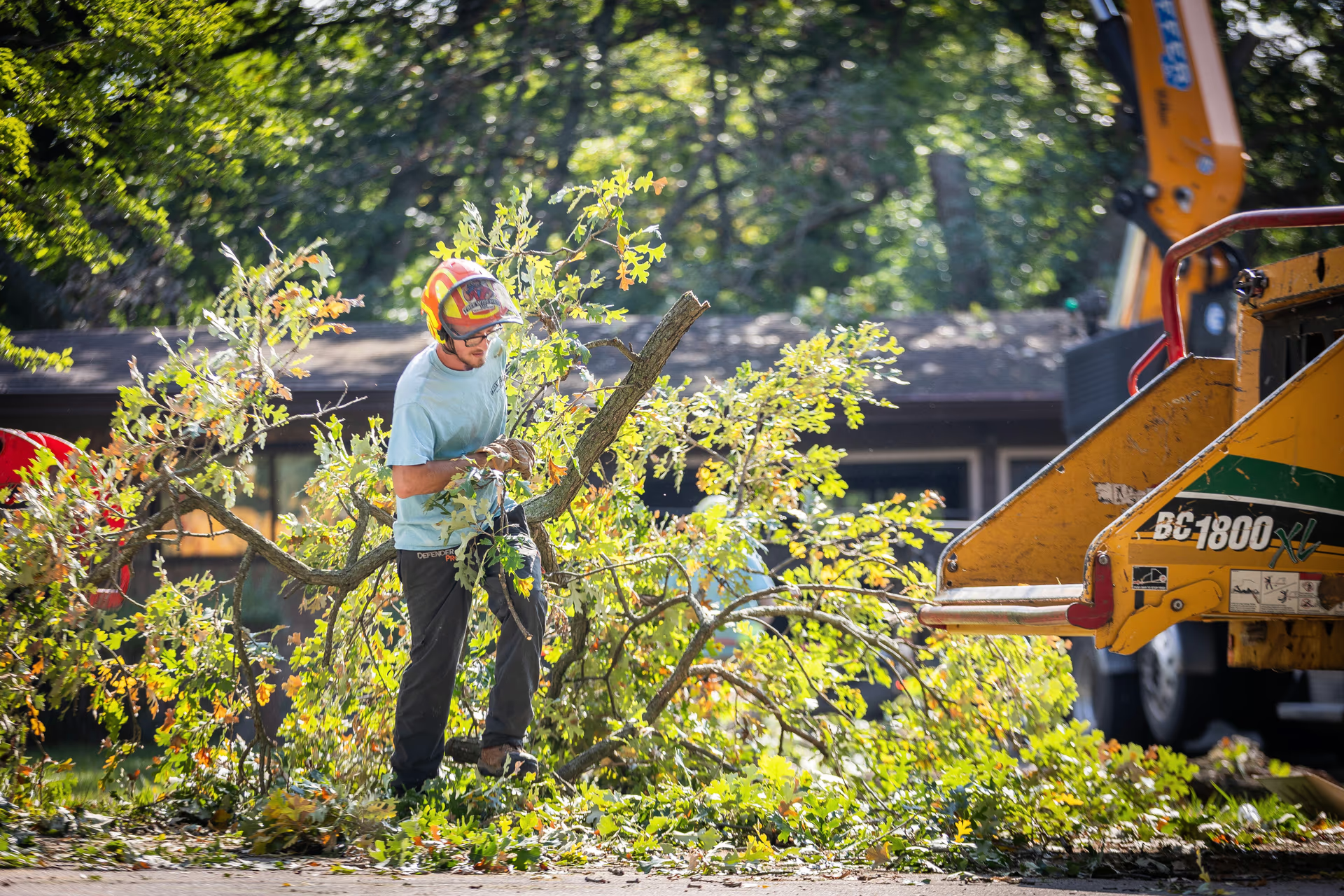
The lot lines are tight and the buildings matter. We use spider lifts that fit through 36-inch gates, GRCS rigging for controlled section drops, and crane-assisted lifts when sections need to clear over historic homes. There's no margin for error in the Heights — the home next to the work is often as historically significant as the one we're working on.
What we look for on every University Heights estimate
National Register historic district
University Heights has been on the National Register of Historic Places since 1982. Tree work that affects historic context — removal of prominent street-side specimens, work visible from the public way — can trigger preservation review through Madison's Historic Preservation Commission.
Heritage elms on injection programs
Some of Madison's last surviving mature American elms are in University Heights, kept alive through consistent propiconazole injection on a 2–3 year cycle. Skipping a treatment cycle can mean losing a 100-year-old specimen worth more than the entire treatment program.
UW campus disease pressure adjacency
University Heights is immediately adjacent to the UW campus, where the heritage oak collection along Observatory Drive faces ongoing oak wilt pressure. The disease moves through Madison's continuous oak canopy via root grafts; campus-area infections become Heights infections through proximity.
City Forestry on terrace trees
Madison Forestry Division has jurisdiction over the terrace strip between sidewalk and street — work on those trees requires Forestry coordination. We handle the permit research and Forestry contact on every Heights job that touches the public right-of-way.
Common University Heights projects
What we do most often for University Heights homeowners and the City Forestry partnership.
Heritage elm injection program
Propiconazole trunk injection on a 2–3 year cycle for surviving American elms. Optimal window: mid-April through June. The reason these elms are still alive.
Oak wilt prevention
Propiconazole injection for high-value red oaks near the UW campus oak wilt corridor. November–March pruning window only, no exceptions.
Heritage canopy structural pruning
Multi-year ANSI A300 structural pruning rotation for the district's mature oak, maple, and elm specimens. Never tops trees.
Tight-access removal with spider lift
Compact tracked aerial work platforms fit through 36-inch gates for backyard work in the dense lot pattern. GRCS rigging for controlled section drops near historic structures.
City Forestry terrace tree coordination
Permit research, application, and coordination with Madison Forestry on adjacent private-property work that touches the public right-of-way.
Construction tree protection
For Heights renovations and additions: tree protection zones, pre-construction root pruning, and post-construction recovery care for mature specimens.
Dispatched from our Madison office
Our Madison office at 2909 Landmark Pl is a short drive from University Heights — close enough for same-week scheduling and rapid emergency response. The Janesville HQ provides equipment depth (40-ton and 75-ton cranes, grapple saw trucks, spider lifts for tight access) when a Heights job calls for the heavy gear.
University Heights Tree Service FAQs
Do historic district restrictions affect tree work in University Heights?
Sometimes. University Heights is listed on the National Register of Historic Places (1982), and Madison's Historic Preservation Commission has review jurisdiction over alterations that affect historic context. Tree removal of mature street-side specimens — particularly heritage elms and oaks visible from the public way — can trigger preservation review. Routine pruning, deadwood removal, and disease treatment generally don't. We handle review-board coordination when the project triggers it.
What's the canopy story in University Heights?
University Heights was platted in 1893 as one of Madison's first planned residential subdivisions, and the canopy reflects that age. Heritage American elms — many surviving Dutch elm disease through aggressive injection treatment — share streets with mature white and red oaks, sugar maples, and ginkgo biloba street trees that have stood for 80 to 130 years. These are some of the highest-value individual specimens in Dane County.
Can you treat heritage elms for Dutch elm disease?
Yes. Dutch elm disease is still present in Wisconsin and continues to take untreated mature elms. For surviving heritage elms in University Heights and adjacent neighborhoods, propiconazole (Alamo) trunk injection on a 2–3 year cycle is highly effective — many of the elms still standing are alive specifically because of consistent injection programs. Optimal injection window is mid-April through June.
Who handles terrace trees on University Heights streets?
City of Madison Forestry Division has jurisdiction over terrace trees (the strip between sidewalk and street). Work on those trees requires a Forestry permit, which we research and apply for as part of the job. The University Heights neighborhood has been a focus for City tree planting and care historically, and we coordinate routinely with City Forestry on adjacent private-property work.
What about oak wilt in University Heights?
Oak wilt is confirmed throughout Dane County, including the UW campus area immediately adjacent to University Heights. The neighborhood's heritage red oaks are vulnerable. Pruning oaks April through October exposes wounds to sap-beetle vectors carrying the fungus — we never prune oaks outside the November–March dormant window unless it's emergency hazard work, in which case we apply tree wound paint immediately.
Can you handle tree work near narrow lot lines and historic homes?
Yes. University Heights' housing stock is dense — Frank Lloyd Wright's Bradley House at 106 Forest Park Road (1909) is a neighbor to comparably significant historic homes throughout the district. Lot lines are tight, mature canopy is everywhere, and there's no room for chainsaw error. We use spider lifts (which fit through 36-inch gates), GRCS rigging for controlled drops, and crane-assisted lifts when sections need to clear historic structures.