How Much Does It Cost to Remove a Large Oak Tree in Wisconsin?
Mature oaks are Wisconsin's most iconic — and most expensive — trees to remove. A 100-year-old bur oak can easily run $5,000–$12,000 to take down safely, and oak wilt regulations in Wisconsin can force the job into a 6-month window. Here's what's actually driving that number, and how to know whether your oak needs to come down at all.
Quick answer: cost ranges for large oak removal in Wisconsin
| Oak size | Typical height | Trunk diameter (DBH) | Cost range |
|---|---|---|---|
| Large | 50 – 70 ft | 24 – 36 in | $1,800 – $4,000 |
| Very large | 70 – 90 ft | 36 – 48 in | $4,000 – $8,000 |
| Heritage | 90+ ft | 48+ in | $8,000 – $15,000+ |
Ranges assume a residential lot with some structures nearby. Heritage oaks in tight backyards with crane access issues can exceed $20,000 for complete removal.
Why oak removal costs more than other species
Dense hardwood = slower cutting, heavier sections
Oak wood weighs roughly 55 lb per cubic foot when green — nearly double the weight of pine. Every section a climber rigs down is heavier, every cut takes longer, and every piece chipped takes more wear on the equipment. A 36-inch-diameter oak section that's 8 feet long weighs over 2,000 lbs.
Crown spread is wide
Mature oaks have enormous crowns. Where a 70-foot pine might have a 30-foot crown, a 70-foot bur oak often has a 60–80-foot crown. That doubles the working area and the number of rigging points the climber needs to set.
Wood disposal is harder
Most residential chippers top out around 12–15 inch branches. Oak limbs routinely exceed that. Large sections must be cut into rounds and either hauled separately or milled on-site. Hauling oak off-site runs $150–$400 per truckload because it takes a heavier trailer than hauling pine or poplar.
Oak wilt: the Wisconsin factor that affects timing and price
Oak wilt (Bretziella fagacearum) is a fungal disease that has been spreading across Wisconsin for decades. It's transmitted in two ways: underground through root grafts between oaks, and aboveground by sap-feeding beetles attracted to fresh wounds. The Wisconsin DNR strongly recommends no pruning or removal of oaks between April 1 and October 1, when beetle activity is highest.
What this means for your removal
- If your oak is healthy and you don't have an emergency, schedule removal October through March. You'll get better pricing (off-season scheduling) and you won't risk infecting neighboring oaks.
- If your oak is already dead from oak wilt, the rules are different — it needs to come down promptly to prevent spore mats from forming under the bark, which are the primary vector for new infections. Debris must be either burned, buried, chipped to small pieces, or covered with plastic through a full summer.
- If it's an emergency (storm damage, structural failure), we remove regardless of season and seal the cut within 15 minutes to minimize beetle attraction.
Summer oak work adds 10–20% to the cost because we have to take sealing precautions and typically chip debris on-site rather than transport logs that could carry the fungus.
Does your oak actually need to come down?
Before spending $5,000+ on removal, get an ISA Certified Arborist to do a formal risk assessment. Many oaks that look like they need removal can be saved with targeted pruning, cabling, or treatment. Oaks that truly need removal usually show:
- Crown dieback greater than 50% — more than half the canopy is bare or dead
- Advanced trunk decay visible as hollows, conks (shelf fungi), or carpenter ant activity
- Root plate lift — soil cracking or heaving around the base
- Confirmed oak wilt with no neighboring oaks within 50 feet at risk (removal isolates the infection)
- Co-dominant stem failure — the main fork has a crack visible from the ground
Oaks that look stressed but aren't showing these signs are often salvageable. A consultation from a TRAQ-qualified arborist (Tree Risk Assessment Qualification) costs $200–$400 and may save you $5,000+ in unnecessary removal. See our guide to ISA Certified Arborists for what that credential means and why it matters here.
What the job actually looks like
Day before: site visit and planning
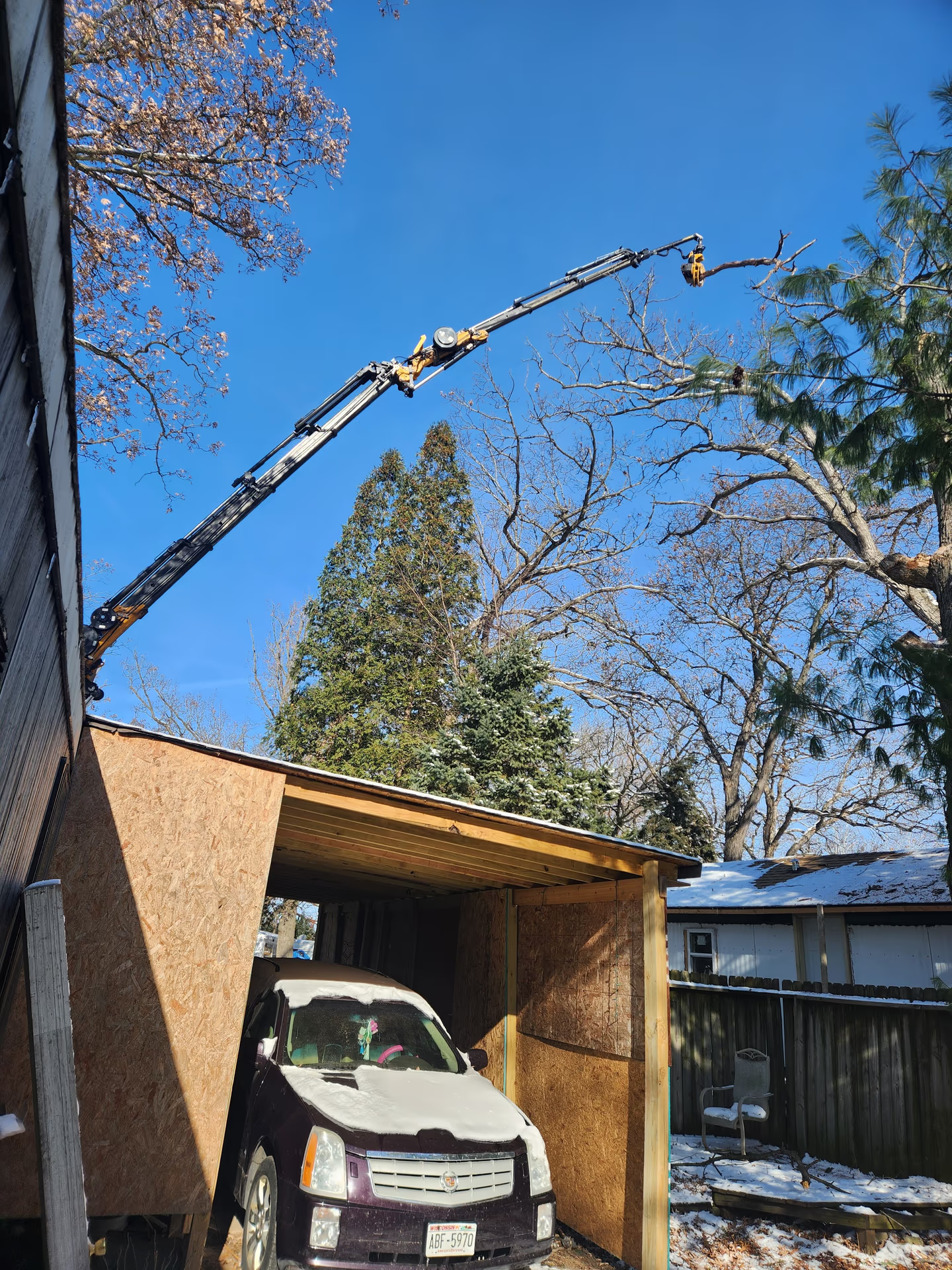
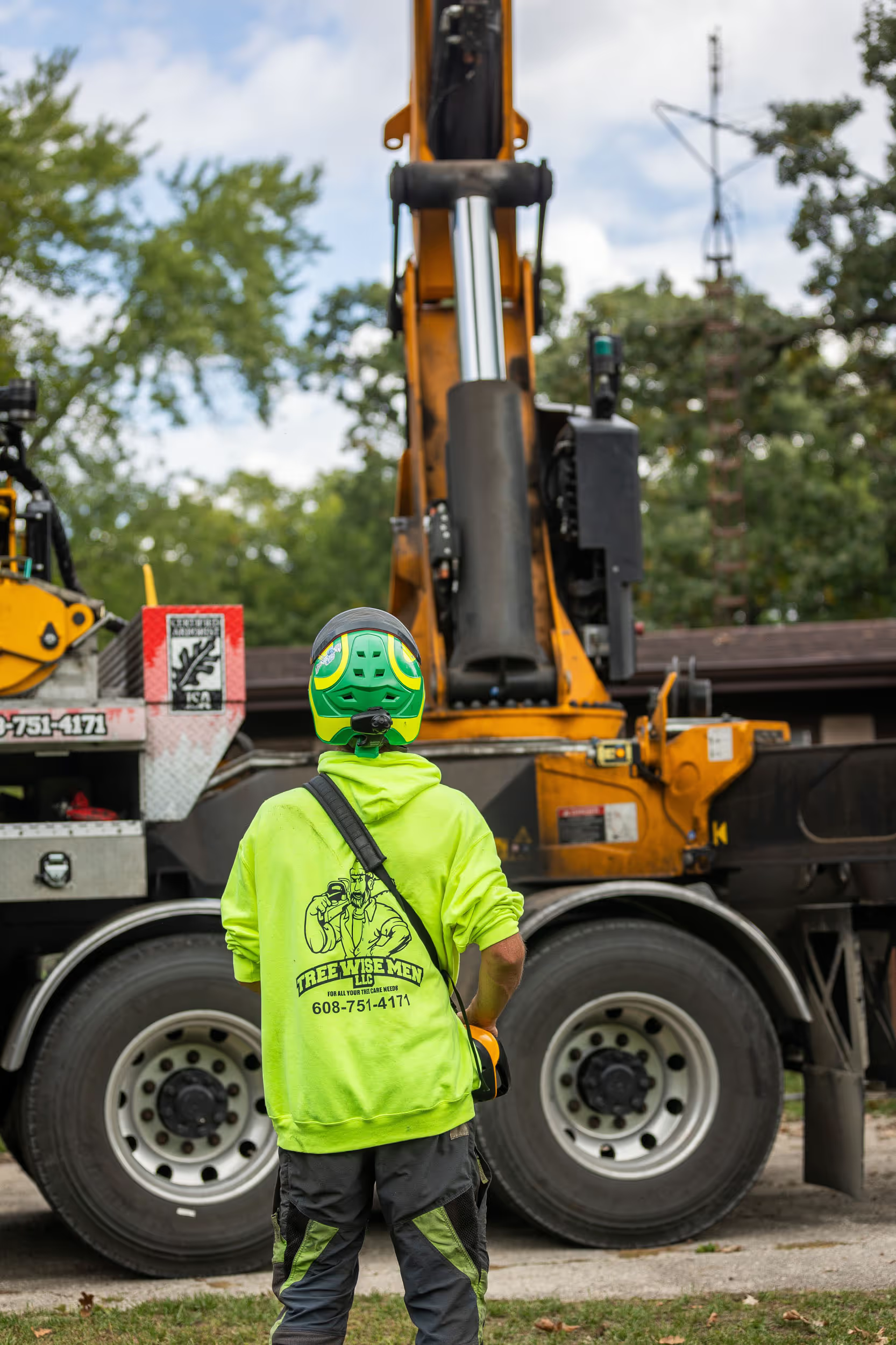
For any oak over 60 feet we do a pre-job walkthrough, photograph the site, identify rigging points, and flag the drop zone. For crane jobs we confirm a staging area for the truck and verify neighboring access.
Day of: 1–3 days of work depending on size
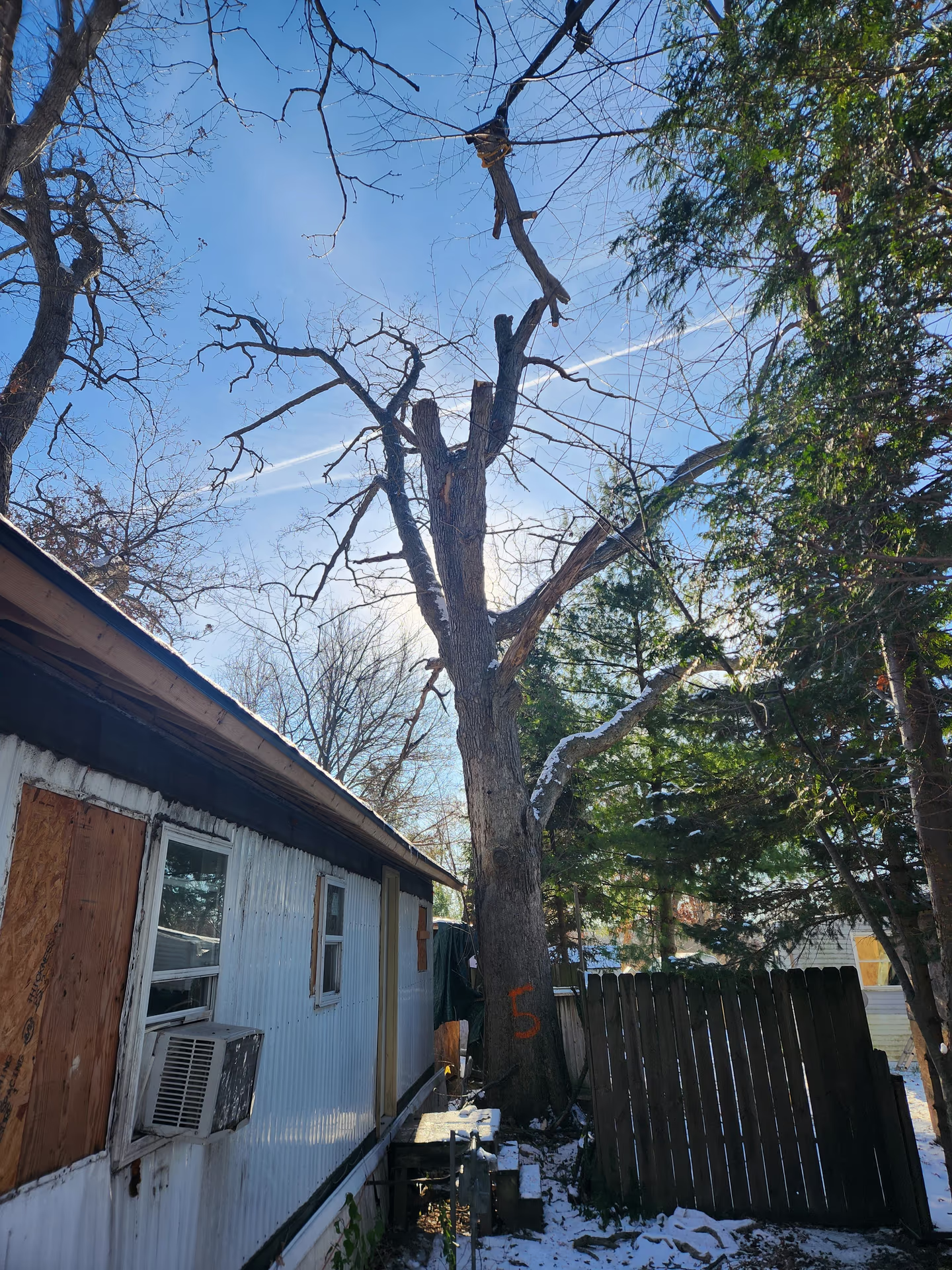
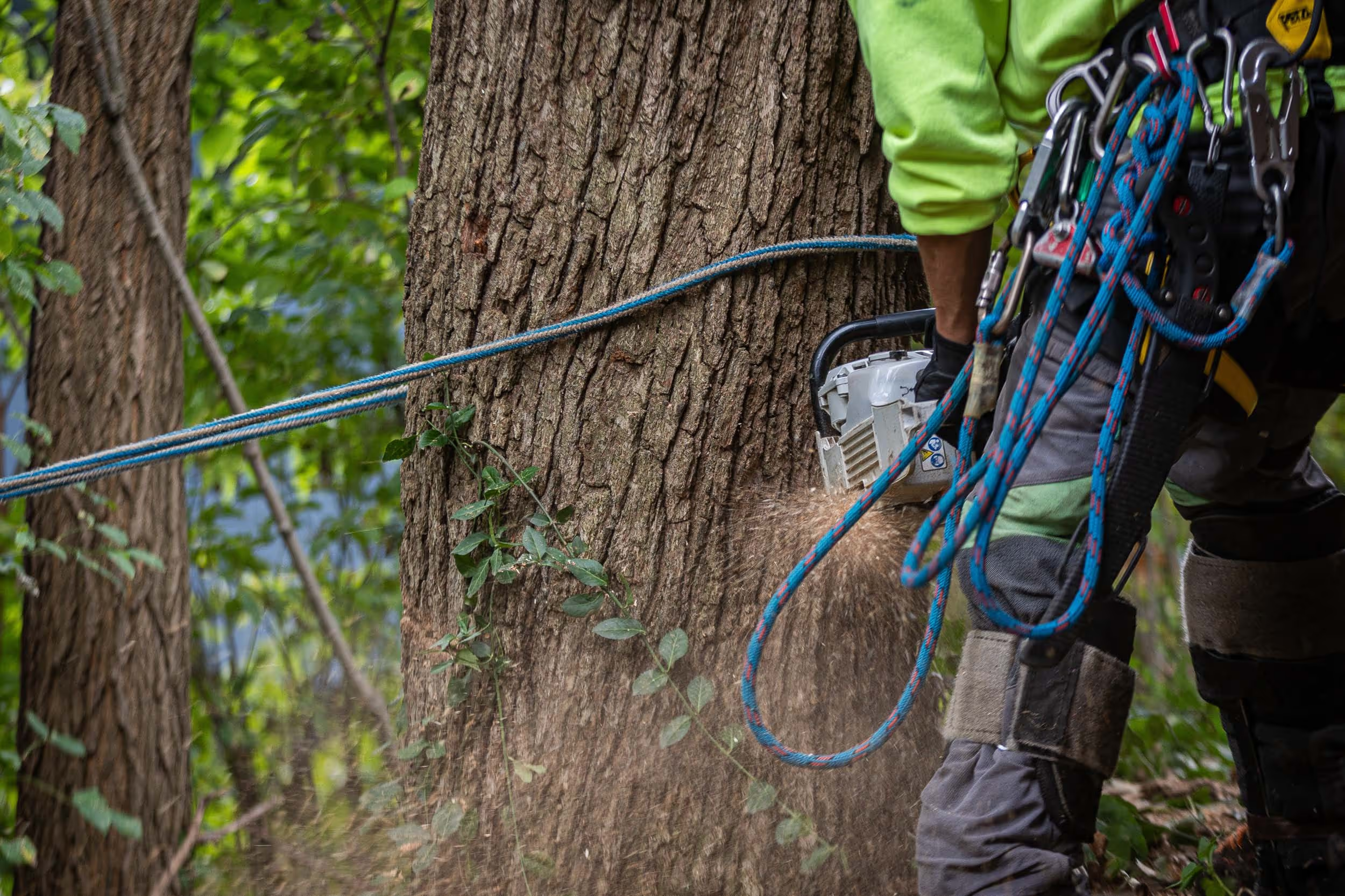
A 60-foot oak with good access: one full day, 3-person crew. A 90-foot heritage oak against a house: 2–3 days, 5-person crew plus crane operator. Work proceeds top-down — crown first, then scaffold branches, then trunk sections, leaving a manageable stump.
Stump handling
Large oak stumps are their own project. A 48-inch oak stump ground out to grade runs $300–$600, and full rootball excavation is rarely offered — the root system of a heritage oak can extend 50 feet in each direction, and removing it means tearing up your yard. Most customers grind to 6 inches below grade and plant turf or groundcover over it.
Saving oak wood
Oak is premium firewood and prized lumber. If you have the space, ask for logs to be left in 8-foot lengths for a local sawyer to mill (mobile sawmill services in southern Wisconsin charge $40–$80 per hour plus $0.25–$0.40 per board foot). A 36-inch heritage oak can yield $2,000+ in milled lumber. Even as firewood, a single heritage oak is 2–3 full cords — worth $500–$750 split and seasoned.
We'll leave whatever lengths and volumes you want at no extra cost, as long as you've got a spot for us to stage them.
Frequently asked questions
Can I remove my oak tree myself to save money?
On anything over 30 feet, no. Oak wood weighs twice what most homeowners expect, and DIY removal of large trees is the leading cause of tree-related injuries and deaths in the US. Small oaks (under 25 feet) with clear drop zones can be DIY projects, but save your money on a large oak and hire a crew.
Will my neighbors need to approve if the tree is on a property line?
In Wisconsin, a tree on the property line is jointly owned. Both property owners must agree to removal in writing — get it signed before the crew arrives, or you could be sued for the tree's value, which for a heritage oak can be in the tens of thousands.
Why are tree service prices so different?
The main reason is insurance. A fully insured crew carrying $2M liability and workers comp has overhead that an uninsured crew doesn't. If you're hiring the uninsured crew, you're assuming the risk yourself — if a climber is injured, the medical bills can come to you. For any removal over $1,500, always ask for a certificate of insurance.
What happens if my oak has oak wilt?
Depending on how advanced, options range from root graft severing (trenching between your oak and neighbors) to removal with specialized debris handling. A consultation from an ISA Certified Arborist will identify whether oak wilt is present and what the treatment window looks like. Call (608) 751-4171 for a same-week assessment.
Get a real quote on your oak
Every heritage oak is different. Pictures help, but a certified arborist on-site catches things photos miss — root plate condition, bark anomalies, co-dominant stem cracks. Request a free estimate and we'll walk the tree with you before quoting. If removal isn't the right call, we'll tell you that too.