Storm Damage Tree Removal in Rock County, WI
Severe storms and tornadoes have been moving through Rock County with increasing frequency, and every time one hits, homeowners face the same set of questions at once: Is this an emergency? Will insurance cover it? Who can actually come out this week when every crew in the county is booked? This guide answers those in order, with the information you need to triage your property and get help faster.
First hour: safety before anything else
- Stay away from downed power lines. Assume every line on the ground is energized. Stay 35+ feet away and warn anyone approaching. Call Alliant Energy (800-862-6222) or your local utility. A tree tangled in a line is a utility problem until they clear it — no legitimate tree service will cut a tree off a live line.
- Don't enter a damaged structure without checking for roof, ceiling, or wall compromise. A tree leaning on a house can shift hours or days after impact.
- Watch for gas smells. If you smell gas, leave immediately and call 911 and Alliant Gas Emergency (800-862-6222) from a safe distance.
- Stay out from under hanging limbs. Storm-damaged trees often have "widowmakers" — broken branches caught in the canopy, waiting for a wind gust to drop them.
Document everything before you touch it
Before moving a single branch, walk the property with your phone and take photos and short videos from multiple angles. Capture:
- Wide shots from the street showing overall damage
- Close-ups of each damaged tree and each damaged structure
- The root plate of any uprooted tree (especially important for insurance)
- Interior damage if a tree penetrated a wall or roof
- Damaged fences, vehicles, sheds, or outdoor furniture
Your insurance adjuster will ask for these. Claims settle 2–4 weeks faster when homeowners hand over a complete photo set up front rather than having the adjuster request them later.
How insurance usually works for storm tree damage
What's typically covered
- Trees that damage a covered structure (house, garage, fence, shed) — repair of the structure AND removal of the tree
- Trees blocking access to your home (driveway/front door blocked) — often covered up to a small allowance, typically $500–$1,000
- Neighbor's tree falls on your property — your carrier covers it, not theirs, unless negligence is involved (e.g., the tree was obviously dead and they ignored warnings)
What's typically NOT covered
- Trees that fall but don't hit anything — usually your responsibility to remove. Some policies have a small tree-removal allowance ($500 or so); check yours.
- Trees that were already dead or dying before the storm — carriers can deny claims for "pre-existing condition"
- Damage from trees you neglected — a rotten tree that should have been removed years ago may not be covered
- Landscaping — most policies have limited coverage for ornamental trees and shrubs, typically 5% of dwelling coverage with per-tree caps
Call your carrier first
Before hiring anyone, call your insurance claims line. They'll:
- Open a claim and give you a claim number
- Tell you what coverage applies and any limits
- Often pre-authorize emergency removal over the phone so you can start immediately
- Schedule an adjuster visit if needed
Get the claim number before the tree service arrives — it speeds up the invoice-to-payment cycle considerably.
Triage: which trees come down first?
After a major event, no crew can hit every call the same day. Here's the priority order we use at Tree Wise Men when we're triaging the intake:
- Trees on occupied structures. House, garage-with-car-inside, bedroom end of a single-story. These get crews first regardless of arrival order.
- Trees blocking emergency access. Can't get an ambulance to your door? That's urgent.
- Leaning trees or widowmakers over structures. Haven't fallen yet but will.
- Trees on unoccupied structures (empty garage, shed, unused outbuilding).
- Trees blocking driveways. Annoying but not safety-critical.
- Trees down on open property. Cleanup can wait days or weeks without risk.
If your situation is category 1–3, say so when you call. Don't minimize. We'd rather hear "there's a tree on my bedroom" and send a crew immediately than find out later we scheduled you behind lower-priority work.
What we handle on a storm-damage call
Removal of downed trees
Fallen trees need to be sectioned, hauled, or stacked depending on size and access. Root plates (the vertical disc of roots and soil from an uprooted tree) are their own challenge — they're heavy, hazardous (can snap back upright if weight shifts), and usually require a mini-excavator to handle properly.
Removal of damaged standing trees
A tree that's half-split, has a broken top, or has lost major scaffold limbs is often unsafe to leave up. Certified arborists assess whether the tree is salvageable (can be pruned and stabilized) or needs to come down. See our leaning tree guide for decision criteria on borderline cases.
Widowmaker removal
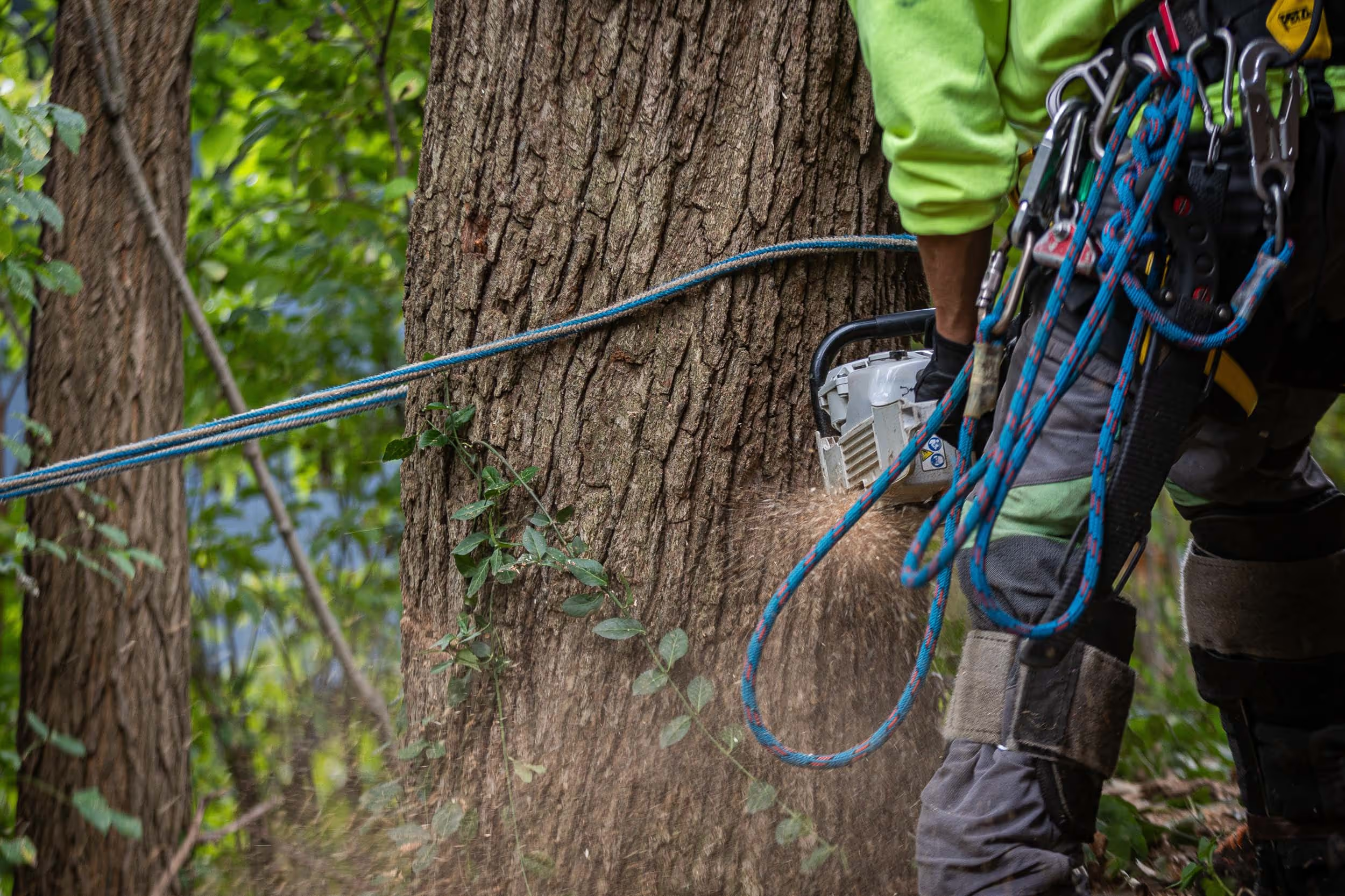
Branches hung up in the canopy are one of the most dangerous cleanup tasks. We use ropes and throwbags to bring these down safely from the ground when possible, or ascend into the tree with climbing gear when not.
Root plate handling
An uprooted tree's root plate holds several thousand pounds of soil suspended in the root mass. Cutting through the trunk releases that tension and the root plate springs back upright, often violently. Proper technique involves cutting from above, then mechanically holding the root plate or lowering it after the trunk is off.
Crane work for large trees
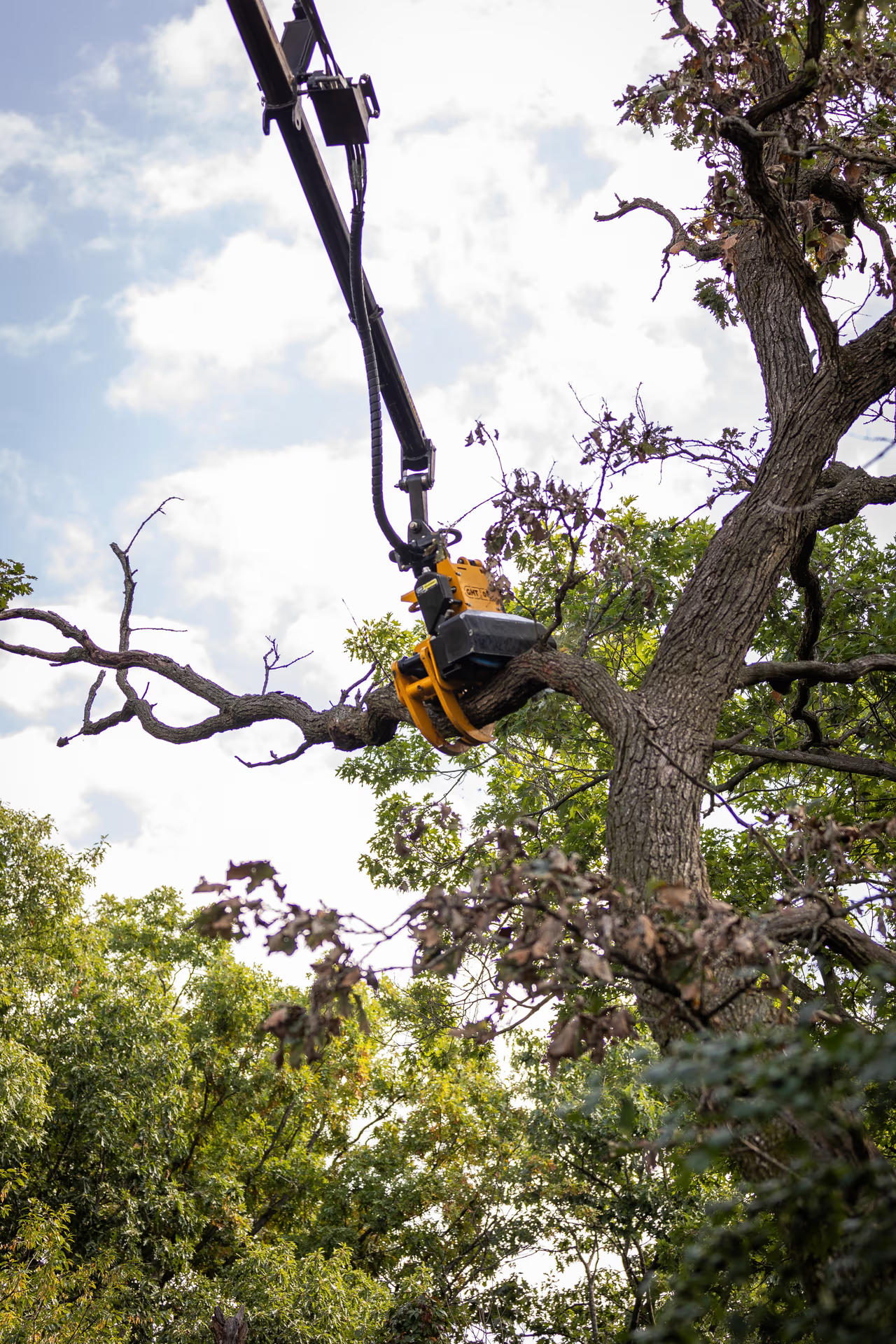
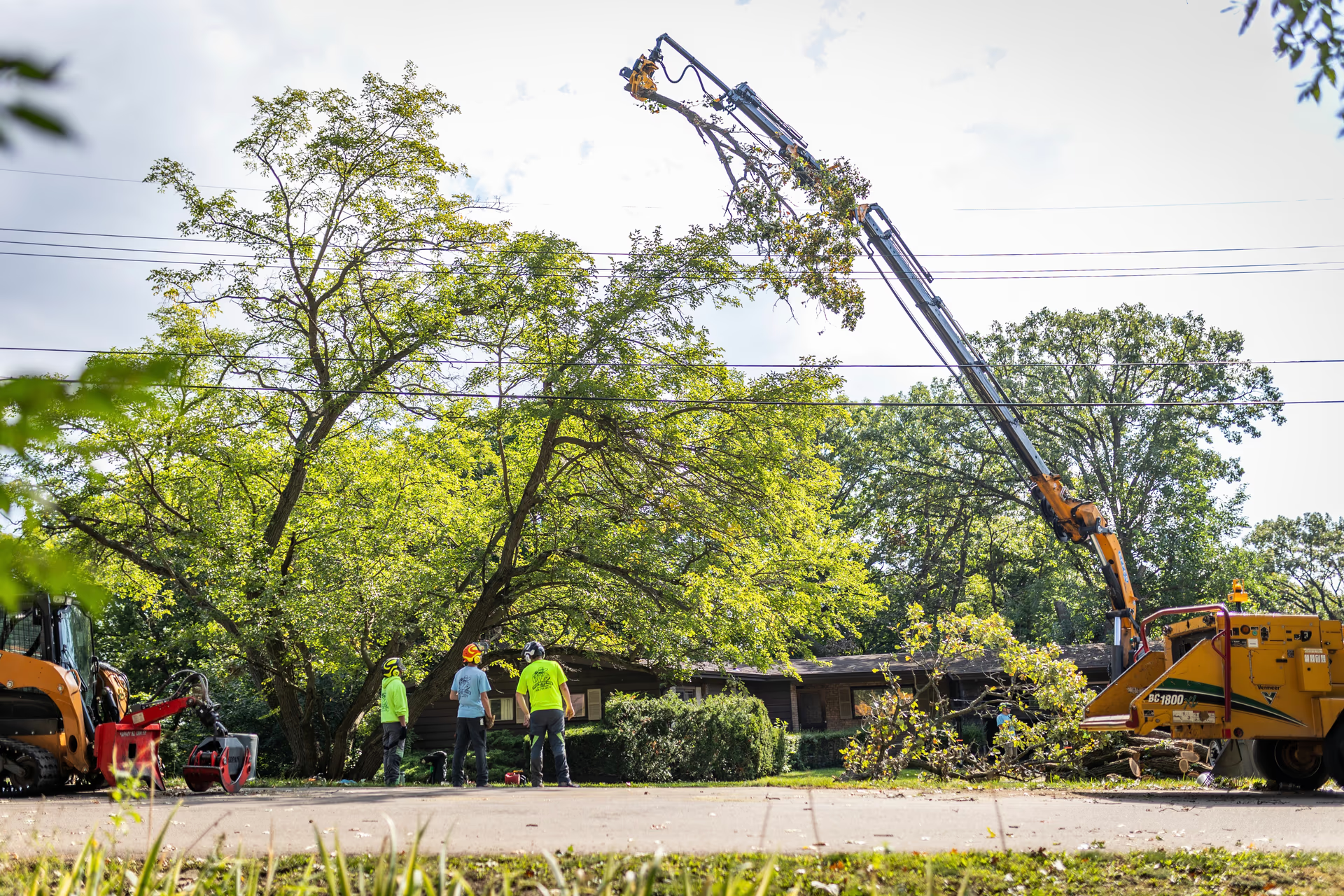
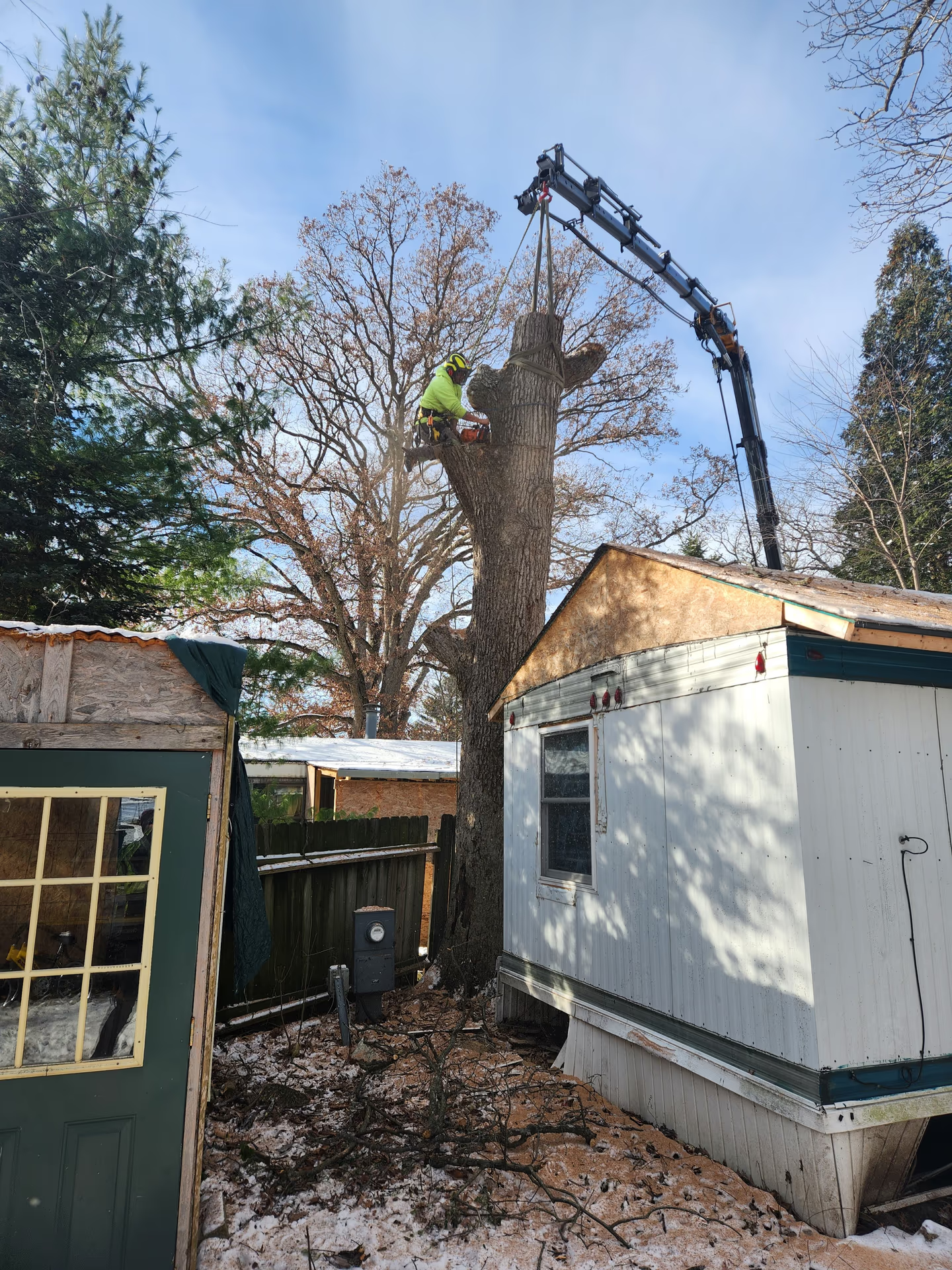
Storm-downed trees often land in positions that are impossible to remove with conventional rigging — pinned across a roofline, or crossed over each other. For these we stage a crane (typically same-day for severe events) and lift sections off cleanly.
Specific hazards common in Rock County storms
Silver maple failures
Silver maples are common in older Janesville and Beloit neighborhoods — they grew fast after World War II street-tree planting programs. They're notorious for failure in heavy wind because they develop co-dominant stems with included bark, and their wood is soft and brittle. If you have a large silver maple, it's worth an ISA Certified Arborist assessment even before the next storm.
Ash trees and EAB
Emerald ash borer has killed most untreated ash trees across southern Wisconsin since roughly 2015. Dead ash trees are extremely brittle — a mild wind can drop major branches, and a strong wind can fold the whole tree. If you still have a standing dead ash on your property, consider it a priority even without a storm.
Storm-weakened trees that don't fall immediately
A tree that survived the storm may have internal cracks, torn roots, or weakened unions that won't show up for weeks or months. Post-storm inspections save lives — we've seen healthy-looking trees fail in light winds 2–4 weeks after a severe event.
Our storm-response process
- Call answered 24/7. Our AI receptionist handles after-hours calls and texts you a self-scheduling link so you don't wait on hold.
- Triage call-back from an arborist within 1–3 hours for emergency priorities, same-day for lower priorities.
- Crew dispatch prioritized by safety category (see above).
- On-site assessment by an ISA Certified Arborist (Jason James, WI-1418A, or Andrew) before any cuts.
- Itemized invoice with insurance-ready detail — structure damage separated from tree removal, photos of pre- and post-work condition included.
How to pick a tree service after a storm (and avoid scams)
Major storms attract out-of-state crews and door-knockers promising fast service at huge discounts. These operators are a known problem in southern Wisconsin after severe weather. Before signing anything:
- Check the address. Is the company local? Can you drive to their shop?
- Verify certification — ISA Certified Arborist numbers are public at treesaregood.org
- Require a certificate of insurance — $2M liability minimum, plus workers comp
- Written quote before work begins — even in emergencies, we provide written scope and pricing via text or email
- Never pay in cash upfront — deposits are fine on large jobs; full payment before work is done is a red flag
- Beware "we were in the neighborhood" pitches — legitimate arborists don't solicit door-to-door after storms
Coverage area for storm response
We cover all of Rock County (Janesville, Beloit, Milton, Edgerton, Evansville, Orfordville, Clinton, Afton, Brodhead, Footville) plus adjacent portions of Walworth, Jefferson, Green, Dane, and Winnebago counties. In severe events we sometimes dispatch further; call and ask.
If you're assessing damage right now
Don't wait if a tree is on a structure or leaning toward one. Call (608) 751-4171 — we pick up 24/7. For non-emergency cleanup and damage assessment, request an estimate online and we'll schedule a walkthrough with an ISA Certified Arborist. Take and save your photos before anyone starts cutting — your insurance claim will move faster for it.