
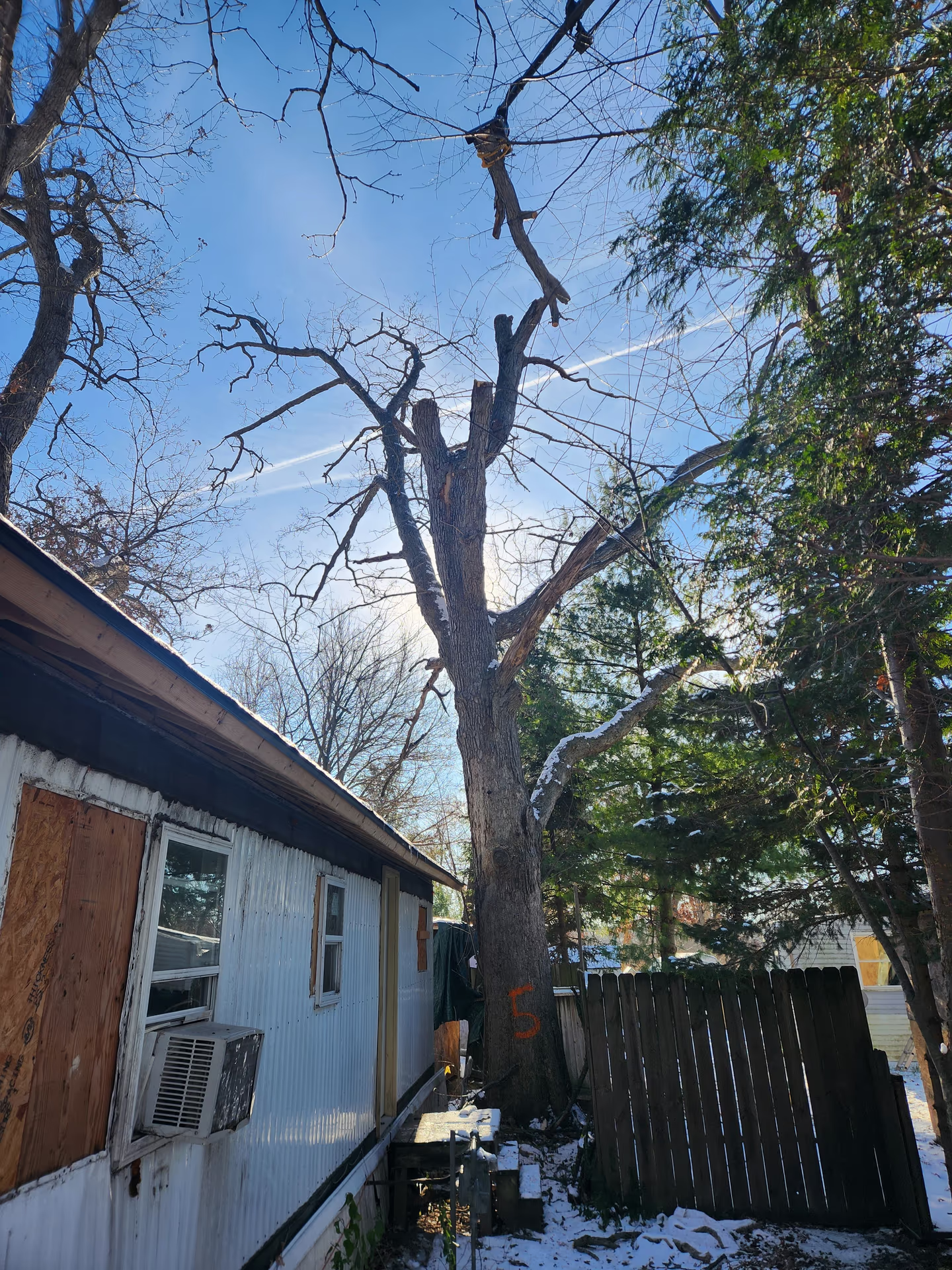
Hazardous Tree Removal in Southern Wisconsin
Dangerous trees do not wait for a convenient time. Whether a storm split your oak in half or you have noticed alarming lean in that backyard maple, our emergency-ready crews respond fast to protect your family and property.
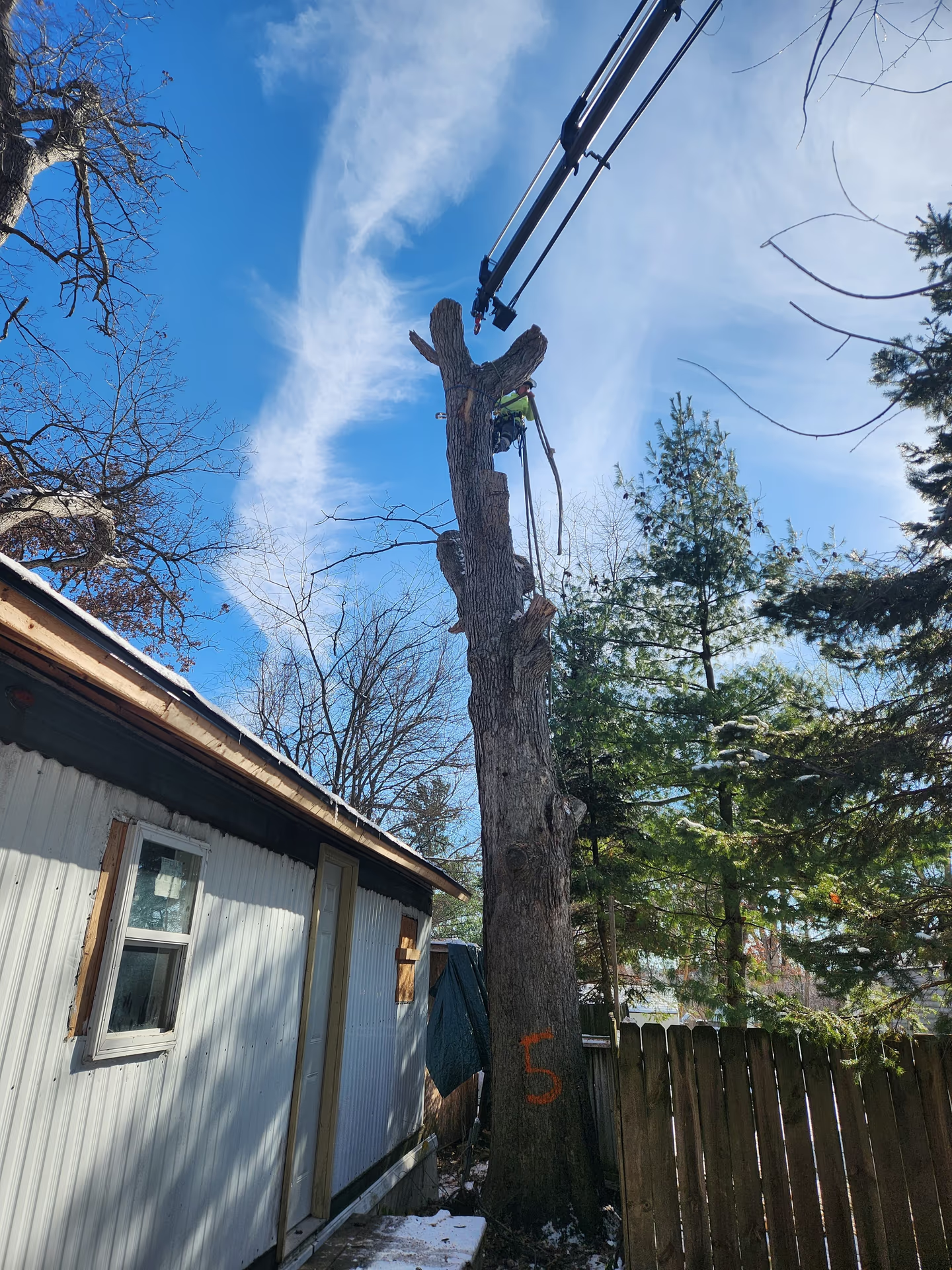
Grapple-Saw Totem Cut— Hazardous Tree, No Ground Crew Exposure
This is the work climbing rigging can't safely do. A totem cut — reducing the trunk from the top down while it stands — is how a grapple saw handles structurally compromised, rotted, or storm-damaged trees that won't hold a climber and can't be safely felled in one piece. The operator stays in the cab, no ground crew under load, every section placed exactly where the cut plan calls for it. This is the engineering decision that defines hazardous tree removal in Southern Wisconsin: not which crew is willing to climb the tree, but which equipment matches the actual failure mode.
Read transcript
This is a time-lapse demonstration of a grapple-saw totem cut on a hazardous tree in Southern Wisconsin. The technique is named for what's left at each stage of the work: a free-standing trunk section — the "totem" — that's progressively reduced from the top down until only the ground-level cut remains.
The grapple saw is a hydraulic boom-mounted attachment that combines a hydraulic chain saw with a clamping grapple. The operator runs the entire cut from the truck cab — positioning the boom, clamping the wood, making the cut, lifting the section clear, and placing it on the ground or the chip truck. No climber goes into the tree. No ground crew passes under a suspended load during cutting. The whole work envelope is engineered to keep humans out of the failure zone.
This technique exists because some trees can't be climbed safely. A trunk with advanced internal decay, a storm-damaged tree with a partial failure, a tree compromised by a root system failing under saturated soil, a hazard tree leaning over a target with no safe felling direction — these are the conditions where climbing rigging introduces unacceptable risk to the crew. The grapple saw moves the human out of the failure zone entirely. It's not the faster tool for every job; it's the right tool when the tree itself is the hazard.
In this time-lapse, you'll see the trunk being reduced section by section. Each cut is sized to keep the lifted piece inside the grapple saw's rated capacity at the working radius. The operator places each section in the designated landing zone — chipper-ready brush separated from logs, log sections stacked for hauling, no piece dropped or thrown. The methodical pace is what makes the work safe; the time-lapse compresses what is actually careful, sequenced execution.
Tree Wise Men LLC operates grapple-saw equipment from our Janesville, Wisconsin headquarters. ISA Certified Arborists, TCIA Accredited operation, full insurance for hazardous tree work and storm response across Rock and Dane counties.
Warning Signs Your Tree Is Hazardous
Trees rarely fail without warning. Learning to recognize danger signs can prevent catastrophic damage. If you spot any of these indicators, contact our arborists for an immediate risk assessment.
Sudden Lean or Shifting
A tree that has recently tilted indicates root plate failure. Heaving soil on one side and exposed roots on the other mean imminent collapse is possible.
Trunk Cracks & Splits
Vertical cracks, seams, or cavities in the trunk compromise structural integrity. Deep splits during winter freeze-thaw cycles can cause sudden failure.
Large Dead Branches (Hangers)
Dead branches in the upper canopy can fall without warning, especially during wind, ice, or heavy snow. These 'widow makers' are extremely dangerous.
Fungal Fruiting Bodies
Mushrooms growing at the base or on the trunk indicate internal decay. Species like honey fungus and artist's conk signal advanced rot that weakens the tree.
Root Damage or Decay
Construction, grade changes, or soil compaction can kill roots. Severed roots on one side of a tree drastically increase the chance of windthrow failure.
Co-dominant Stems with Bark Inclusion
Two main stems growing in a tight V-shape with bark trapped between them create a structural weak point. These unions frequently split during storms.
How We Handle Hazardous Removals
Rapid Risk Assessment
Our ISA Certified Arborist evaluates the tree using the ISA Tree Risk Assessment Qualification (TRAQ) methodology to determine failure likelihood and consequences.
Safety Zone Establishment
We establish a perimeter around the tree, coordinate with utility companies if needed, and brief the crew on the specific hazards and removal sequence.
Controlled Dismantling
Using advanced rigging, speed lines, and crane assistance when warranted, we remove the tree in sections from the top down, controlling every piece.
Documentation & Cleanup
We photograph the process for insurance claims, complete full debris removal, and provide arborist reports documenting the hazard and our remediation.
Hazardous Tree Removal FAQs
Common questions about dangerous tree situations.
How do I know if a tree is hazardous?
Warning signs include large dead branches in the canopy, visible trunk cracks or splits, mushroom or fungal growth at the base, significant lean (especially new lean), heaving soil around roots, and bark falling off in sheets. If you notice any of these, call us for a professional risk assessment.
Do you offer emergency hazardous tree removal?
Yes. We provide priority emergency response for trees that pose an immediate danger to people or property. Our crews are equipped for rapid deployment throughout Southern Wisconsin, including Janesville, Beloit, and Madison.
Will my insurance cover hazardous tree removal?
Homeowners insurance typically covers removal when a tree falls on a structure or blocks access. For standing hazardous trees, coverage varies by policy. We provide detailed documentation including photos and arborist reports to support your insurance claim.
Can a hazardous tree be saved instead of removed?
Sometimes. Our ISA Certified Arborists assess whether cabling, bracing, crown reduction, or other treatments can mitigate the risk. If the tree can be preserved safely, we will recommend those options first. Removal is our last resort.
How quickly can you respond to a hazardous tree situation?
For immediate threats to safety (tree on house, blocking road, leaning toward occupied structure), we typically respond within hours. For hazardous trees that are not yet an emergency, we schedule assessments within 1-3 business days.



Worried About a Dangerous Tree?
Do not wait for a tree to fall. Our ISA Certified Arborists will assess the risk and recommend the safest course of action to protect your property and family.