
Can I Cut My Neighbor's Overhanging Branches in Wisconsin?
You're looking at branches over the fence, and you're googling before you get out the ladder. Good. Here's what an arborist wants you to know before the chainsaw comes out — and how to end up with a tidy trim instead of a lawsuit. For disputes, talk to an attorney; this page is the tree side.
What you generally may do
- Trim branches that cross the property line, back to the line, from your side
- Cut roots that cross the line, on your side — carefully (see below)
- Keep what you cut, or dispose of it; you don't owe the neighbor the wood
- Do the work yourself for small stuff, or hire an arborist for anything larger
- Ask the neighbor to share the cost if the tree is dead, hazardous, or the trim benefits both yards — they may say yes
What gets you in trouble
- Crossing the line — stepping into their yard, or cutting past the boundary — is trespass
- Topping the tree, cutting the trunk, or trimming so hard it dies: you can be liable for the tree
- Wisconsin's timber-theft law lets an owner recover a multiple of the value of a tree cut without consent, and mature yard trees appraise in the thousands
- Cutting major roots on a large tree so it becomes unstable — and then it falls on your house
- Pruning an oak between April and July in Southern Wisconsin: that's how oak wilt gets in
- Working near the service drop or power lines yourself
What “to the property line” means
The line runs straight up from the boundary on the ground. Everything on your side of that vertical plane — branches above, roots below — is what you may trim. Everything on their side, including the trunk and the parts of the canopy over their yard, is theirs.
“Reasonable” is the other half. Cutting a few overhanging limbs back to a lateral branch at the line is reasonable. Stripping one entire side of a mature maple so it's lopsided and stressed is not, even if every cut was technically on your side — and a tree that fails afterward because of it is a problem you may own.
If you're unsure where the line actually is, find your survey pins or the plat before you cut. Guessing the boundary from the fence is how good-faith trims become trespass.
Boundary trees
When the trunk itself sits on the line, the tree is generally treated as jointly owned. That means neither neighbor removes it, tops it, or prunes it in a way that damages it without the other's agreement. Routine trimming of branches on your side is usually fine; a removal, a crown reduction, or a cabling job is a joint decision — and often a shared bill.
The practical move: get one written arborist assessment both households can read, then decide together. It costs nothing with us, and it turns “your tree is dangerous” into “here's what the arborist said.”
Talk first. It's cheaper.
Most overhang problems end one of two ways: a five-minute conversation and a shared arborist visit, or a chainsaw on a Saturday and a letter from a lawyer. The first is cheaper. A short, neutral note works better than a doorbell ambush:
That note does three things: it tells them before they see a crew, it makes clear you're staying on your side, and it opens the door to splitting a bigger job if the tree needs it. Keep a copy.
When DIY is a bad idea
- Limbs bigger than your wrist, or anything you'd need a ladder and a saw for at the same time
- Anything within ten feet of a power line or the service drop
- Oaks between April and July — oak wilt
- Roots larger than a couple of inches on a big tree
- A limb over a roof, a car, or the neighbor's fence — the drop zone is the whole job
- Any tree that looks dead, split, or leaning — that's a hazard assessment, not a trim
What an arborist does on a property-line trim
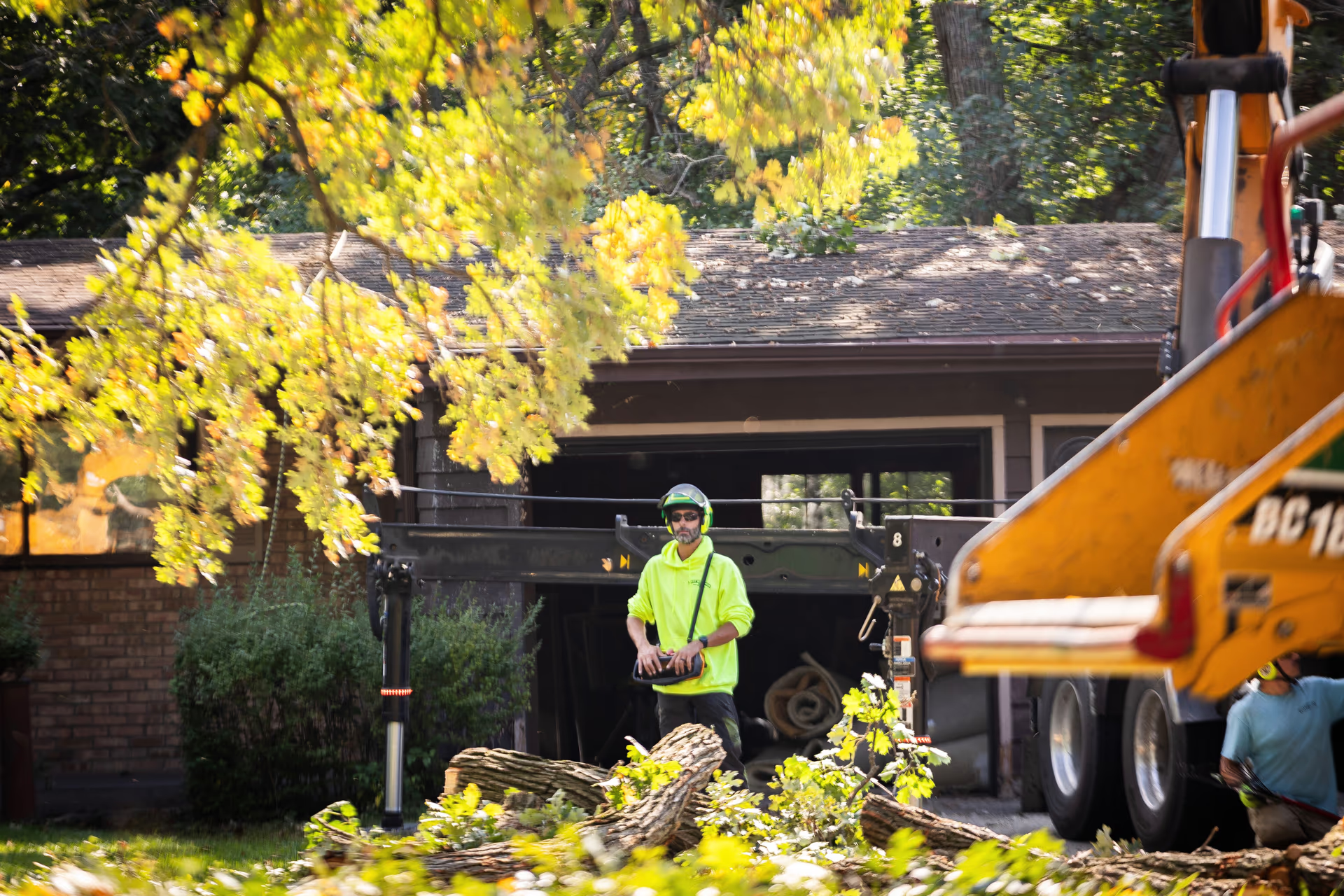
- Confirms the line with you before the first cut, and works entirely from your side
- Cuts to a lateral branch or the collar, not a stub at the line — so the tree seals the wound and doesn't throw weak regrowth back over your roof
- Keeps the drop zone, the ropes, and the chipper on your property; nothing lands on theirs
- Times oaks to the dormant season and seals any unavoidable summer cut
- Carries the insurance, so a limb that swings the wrong way is our problem, not a claim on your policy
- Writes down what was cut and why — useful if the neighbor later says you damaged the tree
A property-line trim on a mature tree typically prices like any other pruning job — see tree trimming and pruning for ranges. If the assessment says the whole tree should come down, that's a different conversation, and one to have with the neighbor.
If it already fell
Overhang law is about live trees. If the neighbor's tree has already come down on your property, the questions change — who pays, what insurance covers, and what to photograph before anything is moved.
What Homeowners Say About Us
4.9 stars across 987 Google reviews of our Janesville, Madison, and Fort Atkinson crews — pulled live from Google, not hand-picked.

They were prompt on the day of service and they checked with me before doing any of the trimming to make sure everyone was on the same page. Efficient and cleaned up the area well after trimming four different trees. Highly recommend.
Jason Stuckey
in the last week · Janesville HQ listing
The team did all we asked in a reasonable time. Clean up was excellent.
Connie Veale
in the last week · Janesville HQ listing
Great crew, had a climber for this job who was masterful. Excellent office staff and billing all electronic. Well organized and seamless process. I highly recommend. Jim
James Davis
in the last week · Madison listing
Property-Line FAQs
General information from an arborist, not legal advice. For a dispute, talk to a Wisconsin attorney.
Can I cut my neighbor's tree branches that hang over my yard in Wisconsin?
Generally, yes. Wisconsin follows the common-law self-help rule: you may trim branches and roots that cross onto your property back to the property line, at your own expense, without entering the neighbor's land. The trim has to be reasonable — if you kill or seriously damage the tree, or cut past the line, you can create liability the other direction. For anything beyond hand tools, hire an insured arborist. This is general information, not legal advice.
Can I go onto my neighbor's property to do the trimming?
Not without permission. The self-help rule stops at the property line: you can cut what's over your side, from your side. Stepping over the line, or having a crew set up in the neighbor's yard, is trespass. If the only safe way to make the cut is from their side, you need their okay — which is usually the moment to have the conversation anyway.
Who pays to trim the overhanging branches?
You do, for the work on your side. Wisconsin doesn't generally require a tree owner to pay for trimming branches that merely overhang — that's the trade-off of the self-help rule. If the branches are dead or the tree is a genuine hazard, that changes the picture, and a written arborist assessment is what turns a neighbor dispute into a shared decision.
What if the trunk is on the property line?
A tree whose trunk straddles the line is a boundary tree, generally treated as jointly owned. Neither neighbor should remove it, or trim it in a way that damages it, without the other's agreement. Routine trimming of branches on your side is usually fine; anything that affects the tree's health or structure is a joint decision.
Can I get in trouble for cutting a neighbor's tree?
Yes, if you cut what isn't yours or damage what is. Wisconsin's timber-theft statute lets a tree owner recover a multiple of the tree's value from someone who cuts it without consent, and a mature yard tree can appraise at thousands of dollars. Topping the neighbor's tree, cutting the trunk, or trimming so hard it dies are the cases that end up in court. A reasonable trim to the line, done well, is not.
Can I cut roots that are coming under my patio or foundation?
The same rule applies to roots: you may cut them back to the property line on your side. The caution is bigger, though, because cutting major roots can destabilize the tree and make it more likely to fall — potentially onto your house. Before cutting roots larger than a couple of inches on a large tree, get an arborist to look. Our foundation-roots guide covers what actually causes the damage.
Is there a wrong time of year to trim the neighbor's oak?
Yes. Oaks in Southern Wisconsin shouldn't be pruned from April through July at minimum — the DNR's high-risk window for oak wilt — and in active infection areas we hold them to November through March. If you cut an overhanging oak limb in June and the tree gets oak wilt, you've turned a branch dispute into a dead heritage tree. Wait for the dormant season, or have the hazard limb removed and the wound sealed immediately.
Get the tree looked at before anyone gets a ladder
A free assessment tells you what can be trimmed, whether the tree is a hazard on either side of the line, and what a clean, insured property-line trim would cost.