
Storm Damage Tree Service in Madison, WI
When severe weather hits Madison, you need a crew that knows the isthmus wind corridor, the saturated lakefront banks, and the heritage canopy of the near-east and near-west neighborhoods. Our 24/7 team dispatches from our Madison Area Office and Janesville HQ to deliver the fastest qualified response in Dane County — with complete insurance documentation, ISA Certified Arborists, and TCIA Accredited safety standards. Active failures are emergency tree removal in Madison.
Financing available — low monthly payments
Watch a Crane-Assisted Storm Removal in Action
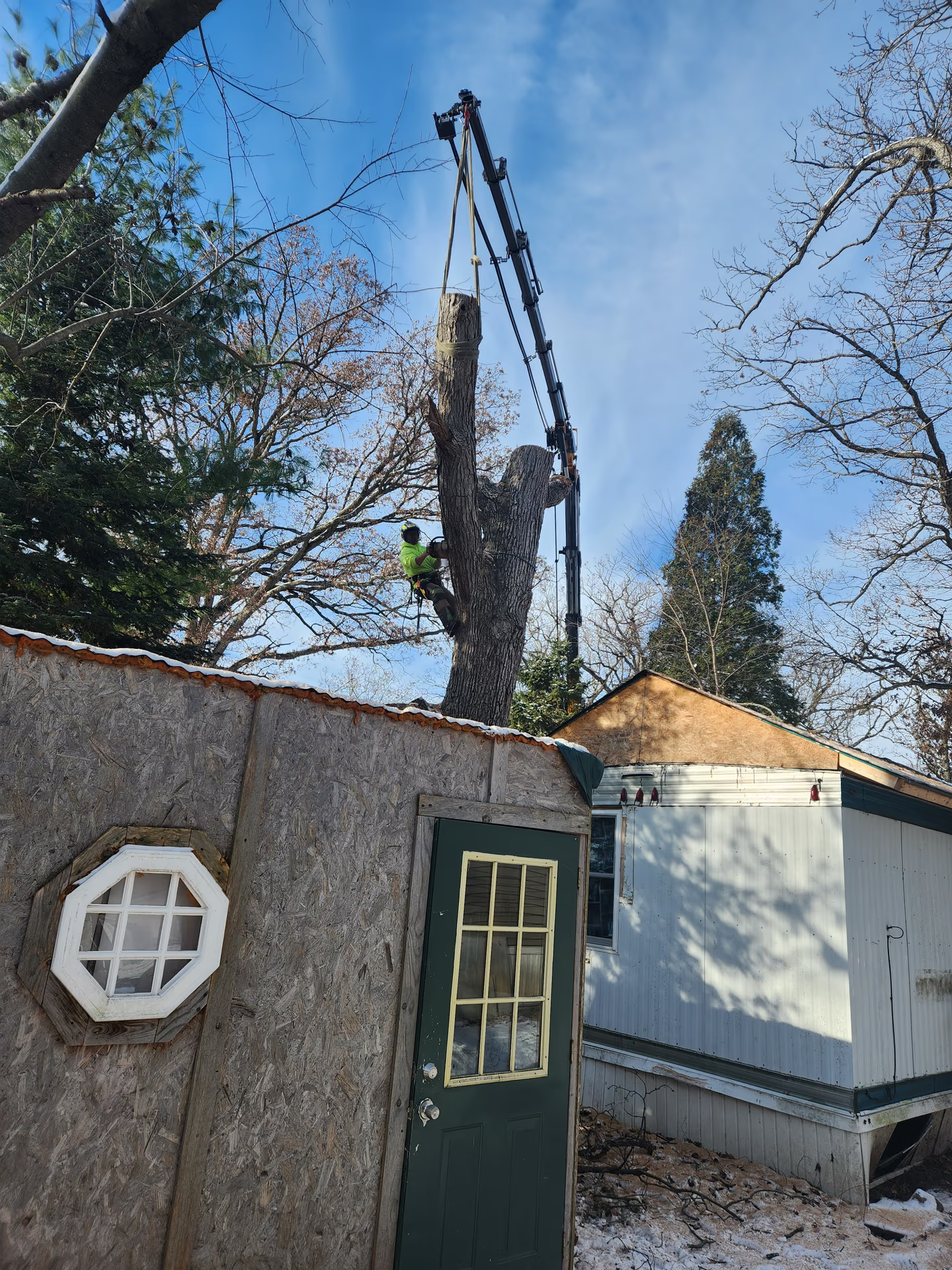
This is what storm-damage response looks like when traditional climbing rigging isn't the right call — our Certified Crane Operator and ISA Certified ground crew handling a job on a Southern Wisconsin property. For Madison area storms — the isthmus wind corridor, the saturated lakefront soils, the heritage canopy in University Heights and Shorewood Hills — crane-capable response is often what separates safe removal from secondary damage to the structures the tree fell on.
Read transcript
This video shows our crew executing a crane-assisted storm damage tree removal on a Southern Wisconsin residential property after a severe wind event. The work begins with a TRAQ-style on-site risk assessment by the lead ISA Certified Arborist — identifying the failed sections of the tree, the load direction the storm has put the wood under, the hazards in the rigging path, and the targets that must be cleared during every lift (the roof, fence, adjacent trees, and any utility drop in the work zone).
The 40-ton boom truck stages on a stable surface with outriggers fully deployed and ground-protection mats positioned to spread the load. Our NCCCO-credentialed Certified Crane Operator runs the lift; the rigger sets chokers and slings on the section being cut while the climber positions for the cut. Communication runs by hand signal and radio per ANSI Z133 standards. There is no improvisation on a critical lift — the lift plan is set before the saw runs.
Each section is sized to keep the lift inside the crane's rated capacity at the working radius, accounting for the storm-residual load and the unpredictable load shifts that storm-damaged wood can produce. The climber makes the rigging cut, the crane takes the weight, and the section is slewed clear of the structure and placed on the truck or the designated landing zone. No ground crew member is under suspended load at any time during cutting.
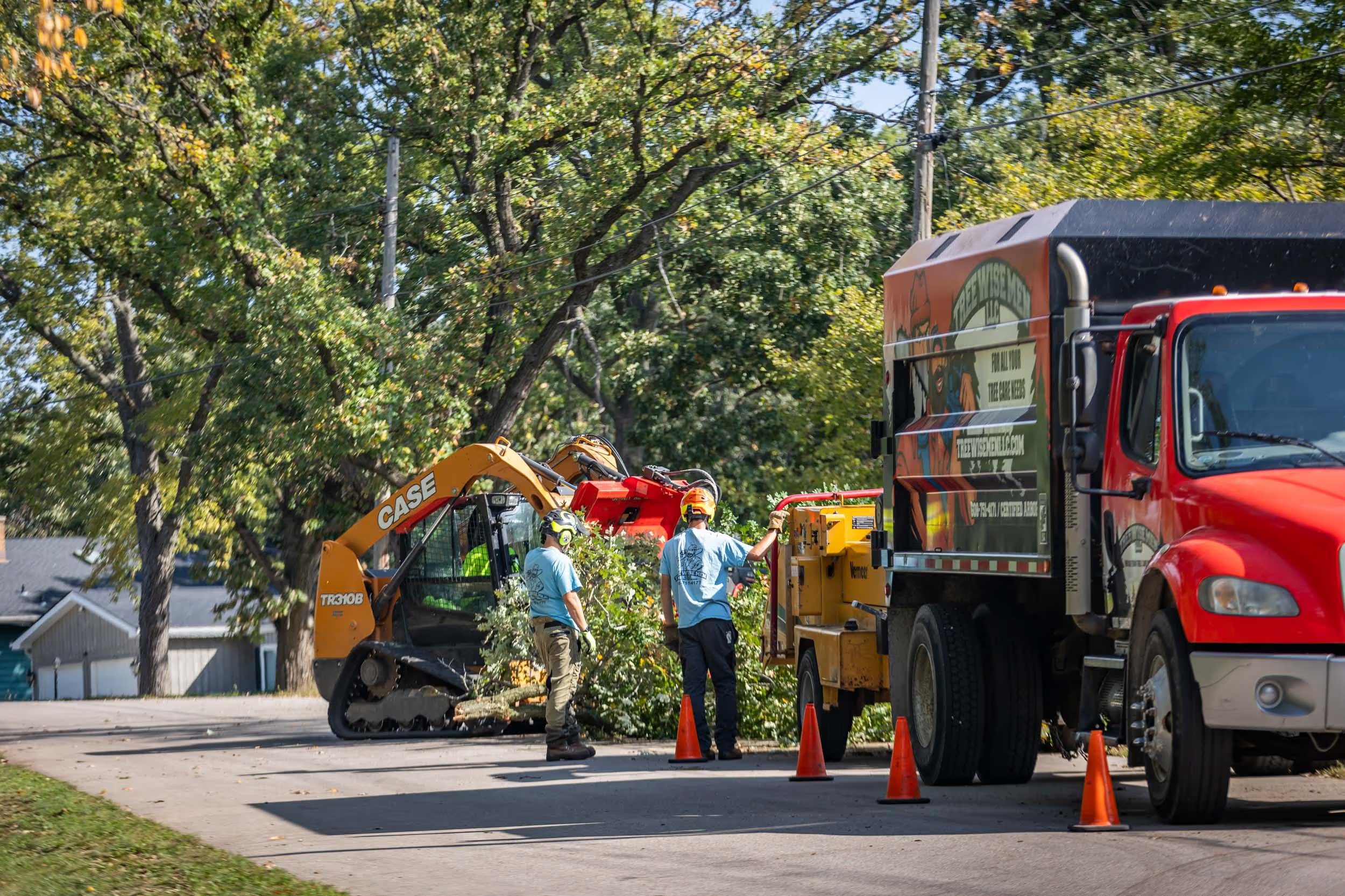
After the crane work, ground crews chip brush and load logs while the lead arborist documents the work for the homeowner's insurance claim — photos before, during, and after, plus a written damage assessment formatted for the carrier. Storm work demands speed; the documentation that follows is what makes the claim process predictable. Tree Wise Men LLC is TCIA Accredited, ISA Certified, and operates a 30+ person commercial crew dispatched from our Janesville, WI headquarters with 24/7 emergency response across Rock and Dane counties.
Severe Weather Patterns in Madison & Dane County
Madison sits in southern Wisconsin's severe weather corridor, but the combination of two large lakes, a narrow isthmus, and dense mature canopy produces storm damage patterns unique to Dane County. Understanding these patterns explains why storm damage tree service in Madison demands crews that know the local terrain.
Isthmus Wind Corridor
The Madison isthmus — the strip of land between Lake Mendota and Lake Monona — funnels wind through a narrow corridor, amplifying gusts by 10 to 20 mph over surrounding areas. Near-east neighborhoods (Marquette, Tenney-Lapham, Schenk-Atwood) and the Capitol Square area sustain disproportionate canopy damage during straight-line wind events.
Lakefront Saturated-Soil Failures
Lakeshore properties on Mendota Drive, Lakewood Boulevard, the Monona shoreline, and around Lake Wingra have trees on banks where fluctuating lake levels saturate root systems seasonally. Even healthy-looking lakefront trees can fail at moderate wind speeds when soil anchorage is compromised. Wind-throw clusters along the shoreline after storms are predictable.
Heritage Canopy in Near-West
University Heights, Shorewood Hills, Maple Bluff, and Spring Harbor have heritage oaks, sugar maples, and the rare surviving American elm — many over 100 years old. These trees are valuable but increasingly vulnerable to wind damage as they reach late maturity. Preservation-focused storm response is essential to avoid unnecessary loss of high-value specimens.
Severe Thunderstorms (May–September)
Dane County averages 30 to 40 thunderstorm days per year. The most destructive storms occur June through August, producing straight-line winds exceeding 60 mph, large hail, heavy rain, and frequent lightning. Straight-line winds cause the most widespread tree damage in Madison neighborhoods.
Microbursts on the Isthmus
Microbursts — localized columns of rapidly descending air producing winds sometimes exceeding 100 mph in a small area — are common during Madison's summer thunderstorms. The Vilas, Bay Creek, and near-east neighborhoods have experienced microburst events that flattened entire residential blocks while surrounding areas remained untouched.
Ice Storms & Heavy Wet Snow
Wisconsin ice storms coat branches with heavy ice that exceeds their weight capacity. Madison's heritage silver maples, Bradford pears, and multi-stemmed ornamentals are especially vulnerable. Late-season wet snow in November and early spring snow in April/May catches mature canopy with leaves still attached, amplifying weight and breakage dramatically.
Madison isthmus residents: the wind-corridor effect makes structural pruning, cabling, and bracing especially valuable on heritage canopy here. See our deep dive on Madison isthmus storm damage patterns for neighborhood-specific recommendations.
Common Storm Damage We Handle in Madison
Trees on Madison Homes & Garages
Trees fallen on houses, garages, sheds, fences, and decks across Madison's residential blocks require immediate professional removal. We stabilize the tree to prevent further structural damage, remove it in controlled sections, and tarp exposed areas to prevent water intrusion until repairs are made. Full photo documentation for your insurance claim.
Wind-Thrown Trees on Lakefront Lots
Saturated soil along Lake Mendota, Lake Monona, and Lake Wingra shorelines makes lakefront trees especially vulnerable to complete uprooting during wind events. We section and remove the trunk, cut the root plate to below grade, and backfill the crater. Crane-assisted removal is often the right approach for shoreline work given dock structures, retaining walls, and adjacent landscaping.
Broken Canopy in Mature Neighborhoods
University Heights, Shorewood Hills, Spring Harbor, and the near-east neighborhoods all have heritage canopy with brittle late-maturity branches. Broken branches lodged in the canopy ('widow-makers') are among the most dangerous post-storm conditions and can fall at any time. We use climbing and rigging techniques — and compact tracked lifts where access permits — to safely remove lodged limbs.
MGE Utility-Line Coordinated Removal
Trees fallen on or leaning into Madison Gas & Electric lines require coordinated response. MGE de-energizes the line or stations a qualified line-clearance crew on site before our crew begins removal. We never work energized lines ourselves and have an established working relationship with MGE for storm response across the city.
Insurance Claims & Preventive Pruning
We help Madison homeowners navigate insurance claims after storm damage and provide preventive pruning to reduce future storm damage risk on heritage canopy.
Insurance Claim Documentation
We photograph all damage before, during, and after removal. You receive a written damage assessment describing the tree, what it struck, and the full scope of work performed. Itemized invoices are formatted for easy claim processing. Adjusters across State Farm, American Family, Allstate, Erie, and other Madison-area carriers recognize Tree Wise Men as a TCIA Accredited company.
Working With Your Adjuster On-Site
Our crew can meet your insurance adjuster at your Madison property to explain the work performed, why specific methods were necessary (crane use for lakefront removals, for example), and answer technical questions. This direct communication prevents claim disputes and delays. Many Madison homeowners have told us our documentation made their claims significantly easier.
Preventive Pruning Reduces Risk
Regular crown cleaning removes dead branches before storms turn them into projectiles. Crown thinning reduces wind resistance, especially valuable on isthmus and near-east heritage canopy where the wind corridor amplifies gusts. Structural pruning corrects weak branch attachments before they fail. These measures significantly reduce storm damage risk and extend service life on high-value specimens.
Cabling & Bracing for Heritage Trees
Trees with structural weaknesses — co-dominant stems, heavy lateral limbs, or previous storm damage — can be supported with steel cables and threaded rods. On Madison's heritage canopy, cabling and bracing can extend the service life of valuable specimens by decades. Our arborists assess which trees are candidates for supplemental support before recommending removal.
Madison's Fastest Qualified Storm Damage Response
Our Madison Area Office at 2909 Landmark Pl gives us a base inside Dane County, with crews and equipment also dispatching from our Janesville HQ for storm-scale work. That combination delivers the fastest qualified response in Madison — and during major events we can stack multiple crews on a single neighborhood for rapid clearance.
We're TCIA Accredited, ISA Certified, and CTSP-credentialed. That matters during storm work: untrained crews show up after every big event and unsafe work creates secondary injuries and claim disputes. We document everything, work safely, and coordinate with MGE and the City of Madison Forestry team when scope demands.
Call our 24/7 emergency line: (608) 716-4167
Tree & Property Services Across Madison & Dane County
Explore our other Madison-specific tree care pages — each covers the local permits, species, and neighborhood access that matter for your property.
Storm Damage FAQs for Madison
Common questions about storm damage tree service in Madison, WI.
What types of storm damage do you handle in Madison?
We handle all types of storm-related tree damage in Madison: trees fallen on houses and garages on the isthmus and near-east neighborhoods, wind-thrown trees on lakefront properties along Mendota and Monona, broken canopy and hanging limbs ('widow-makers') in mature near-west blocks like University Heights and Shorewood Hills, split trunks from lightning, trees leaning on Madison Gas & Electric or MGE lines (we coordinate with the utility), and partially failed trees that haven't yet reached the ground but pose imminent risk.
How quickly can you respond to storm damage in Madison?
Our Madison Area Office at 2909 Landmark Pl gives us a base inside the city — most Madison life-safety calls are reached within 60 to 90 minutes. During major storm events affecting Dane County, we triage by severity — trees on occupied structures and blocked emergency routes are prioritized. We also dispatch additional Janesville HQ crews to Madison when scope demands. Call our 24/7 line at (608) 716-4167.
Will my Madison homeowners insurance cover storm damage tree removal?
In most cases, yes. Madison-area homeowners policies typically cover tree removal when a tree falls on a structure (house, garage, fence, driveway) or blocks access to your property. Trees that fall in open yard areas without hitting a structure may not be covered for removal. We provide detailed photo documentation, written damage assessments, and itemized invoices formatted for easy claim processing — and we can meet your adjuster on site.
What should I do immediately after storm damage in Madison?
Ensure everyone is safe and evacuate if there's structural damage. Call 911 if anyone is injured. Stay clear of downed power lines or trees touching MGE lines — never assume a line is de-energized. Do not walk under trees with hanging broken branches. Call us at (608) 716-4167 for professional assessment and removal. Take photos from a safe distance for insurance documentation.
Why is the Madison isthmus prone to severe storm damage?
The Madison isthmus — the narrow strip of land between Lake Mendota and Lake Monona — funnels and accelerates wind during storms, producing localized wind-tunnel effects that exceed surrounding-area gusts by 10 to 20 mph. Combined with mature canopy from heritage oaks, maples, and elms planted in the early 1900s, the isthmus and near-east/near-west neighborhoods (Marquette, Tenney-Lapham, Schenk-Atwood, University Heights, Spring Harbor) sustain disproportionate storm damage. Lakefront properties also face saturated-soil wind-throw risk after lake-level rises.
Do you coordinate with MGE on utility-line trees in Madison?
Yes. Trees fallen on or leaning into MGE conductors require coordinated response. We never work energized lines ourselves — MGE either de-energizes the line, installs protective covers, or stations a qualified line-clearance crew on site before our crew begins removal. We've worked with MGE and the City of Madison Forestry team on coordinated storm response for years and know the protocols.
Can you help prevent storm damage to my Madison-area trees?
Yes. Preventive pruning is one of the most effective ways to reduce storm damage risk on Madison's mature canopy. Regular crown cleaning removes dead branches before storms turn them into projectiles. Crown thinning reduces wind resistance. Structural pruning corrects weak branch attachments (especially co-dominant stems in silver maples) before they fail. Cabling and bracing support heritage trees that are too valuable to remove but structurally compromised. Our ISA Certified Arborists assess your trees and recommend specific risk-reduction measures.




Storm Damage in Madison? Call Now.
Our 24/7 emergency crew is standing by. Madison Area Office on Landmark Pl plus Janesville HQ for storm-scale dispatch. ISA Certified, fully insured, TCIA Accredited. Removal, cleanup, and complete insurance documentation.