
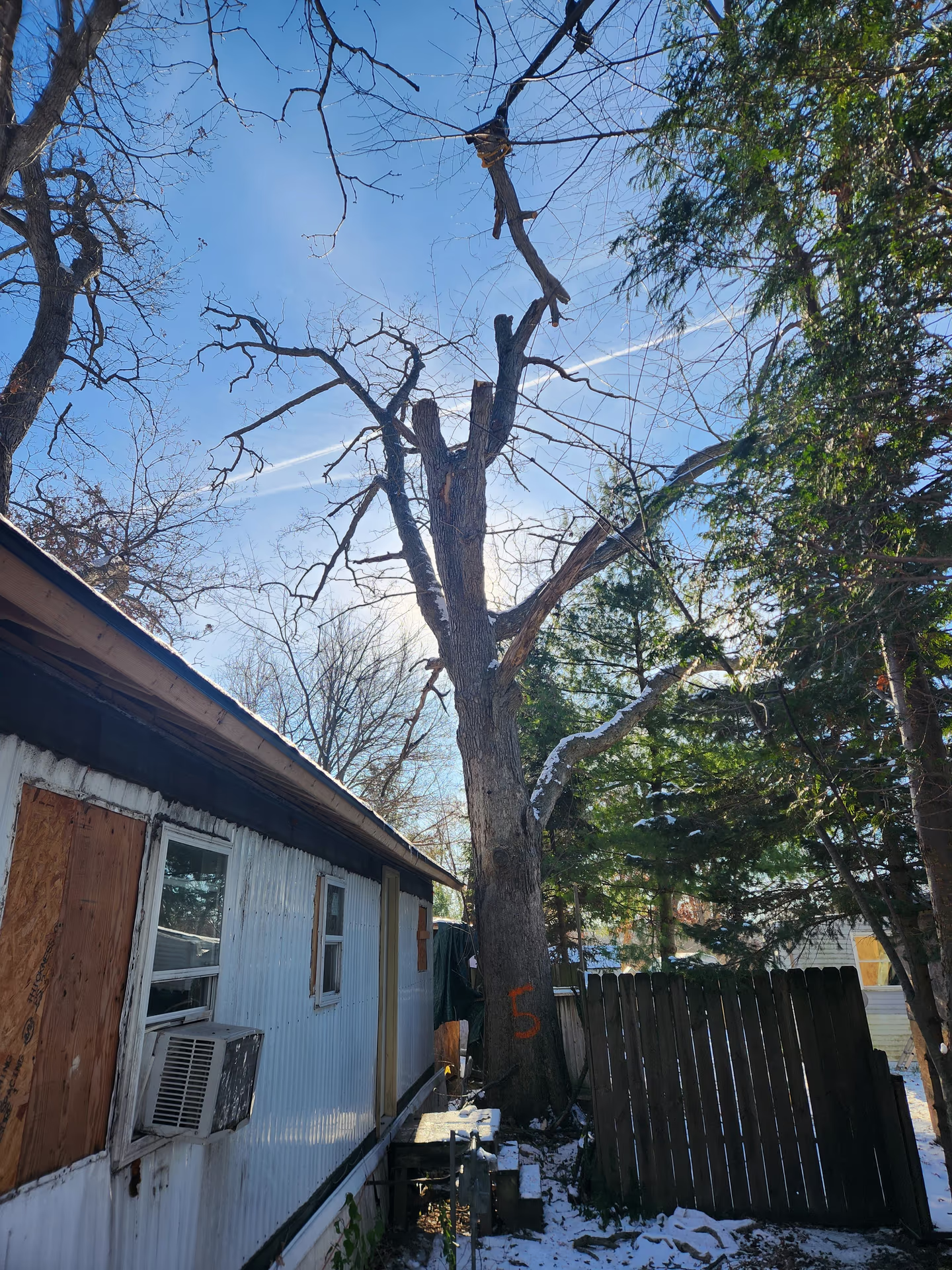
Oak Wilt in Wisconsin: Treat or Remove?
It's July, the top of the oak is browning, and the leaves are dropping while they're still half green. Or the neighbor's oak died and someone said “root grafts.” The DNR and UW Extension own the science; this page is the homeowner version, with the costs.
Financing available — low monthly payments
Red, black, or pin oak
Wilt starts at the top of the canopy and works down. Leaves brown from the tip and margins inward while the base stays green, then drop — still partly green — in mid-summer. Healthy to bare in four to six weeks.
White or bur oak
Same leaf symptoms, but one branch at a time, and the tree declines over several years rather than one season. These are the oaks most often worth treating.
Lookalikes
Two-lined chestnut borer (drought-stressed oaks, dieback from the top with D-shaped exit holes), plain drought scorch, and construction root damage all mimic wilt. Get an arborist's eyes on it; a lab test settles it when the answer matters.
The decision matrix
Species decides the options. Timing decides whether they still work. Neighbors decide how big the job is.
| Situation | Usually treat | Usually remove | Also do |
|---|---|---|---|
| Healthy, high-value white or bur oak within 100 ft of an infected oak | Preventive propiconazole trunk injection | — | Map the grafts; consider a plow line between it and the infected tree |
| Red, black, or pin oak with active canopy wilt | Rarely worth it once symptoms show | Yes — after the root-graft barrier is planned | Handle the wood so it can't produce spore mats next spring |
| Healthy red oak near an active infection pocket | Preventive injection buys time | — | Plow line now; don't wait for symptoms, because red oaks die in weeks |
| Several same-species oaks in a row, one infected | Inject the healthy ones on the far side of the barrier | The infected one, after the barrier | Think in pockets, not single trees — the grafts already connected them |
| White or bur oak with early, branch-by-branch decline | Injection plus removal of infected limbs can hold it for years | If more than a third of the crown is gone | Dormant-season work only |
| Dead oak, already leafless | — | Yes; the fungus in the stem is still a beetle source | Barrier if healthy same-species oaks are within about 50 ft |
What treatment actually is
- A trunk injection of propiconazole (Alamo and equivalents), taken up through the sapwood into the crown
- Works best before symptoms — it's a preventive for healthy oaks near an infection, not a cure for a collapsing red oak
- Repeated roughly every two years while the threat persists; a white or bur oak with early symptoms can be held with injection plus removal of infected limbs
- Priced by trunk diameter; for a mature yard oak, a few hundred dollars per treatment
- Applied by a licensed applicator in the growing season, when the tree can move the product
What removal actually is (and why the plow comes first)
- Root-graft barrier first: a vibratory plow trench 4–5 ft deep between the infected oak and any same-species oaks within about 50–100 ft, severing the grafts the fungus travels through
- Then the infected tree comes down — cutting a live wilted oak before the barrier can push the fungus into its neighbors
- Stump treatment inside the pocket where appropriate, so the root system stops hosting the fungus
- Wood handling: debark, chip, burn, or tarp and seal through next summer — red-oak wood can grow spore mats under the bark the following spring
- Dormant-season scheduling wherever the tree isn't an immediate hazard
What each path costs in Southern Wisconsin
Planning numbers, not quotes. The pocket — how many oaks, how they're grafted, what's under the sick one — sets the real figure, and the assessment that maps it is free.
| Path | Typical cost | Notes |
|---|---|---|
| Preventive injection, per oak | A few hundred dollars per treatment | Priced by trunk diameter; repeated about every two years while the threat persists |
| Root-graft barrier (vibratory plow) | Quoted per site | Depends on trench length, number of trees, and access; usually far less than losing the neighboring oaks |
| Removal of an infected oak — upland lot | $1,400 – $2,800 | Large oak rigged over structures; see the Wisconsin cost guide size bands |
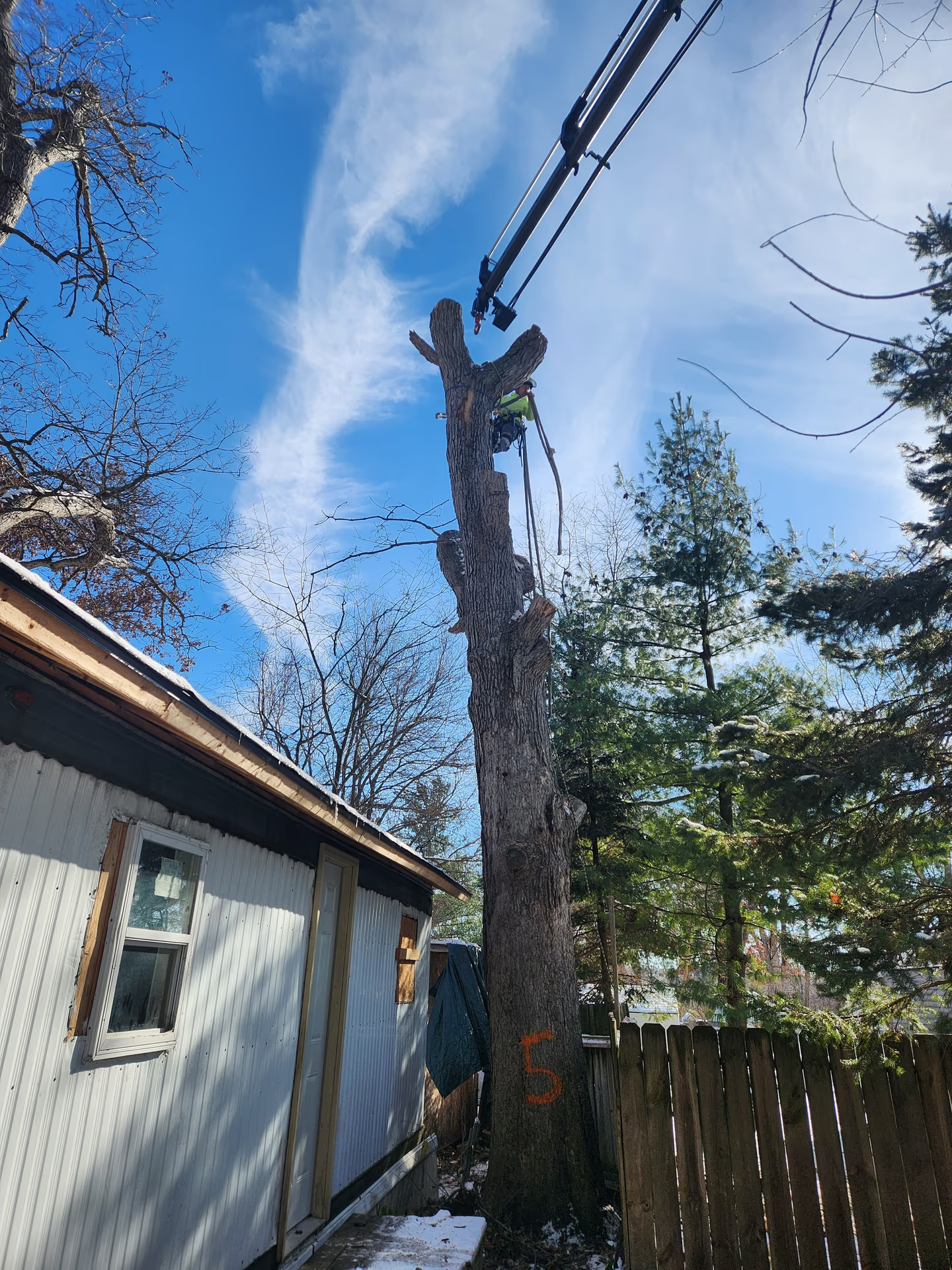
| Removal of an infected oak — crane over a house | $5,000 – $8,000+ | Heritage oaks against the house or on lakeshore slopes; see the crane cost guide |
| "Save the neighbors, remove the sick one" package | Barrier + removal + injections, quoted together | Cheaper as one plan than three separate calls, and it's the plan that actually stops the spread |
The honest line: treatment is cheaper than replacing a 70-year-old oak, and a replacement won't give the shade back in your lifetime. But removal of a dying red oak is often the only thing that stops that stem from feeding beetles and root grafts — and putting fungicide into it is money spent on a tree that's already leaving. Ranges for removal come from the Wisconsin cost guide and the crane cost guide.
The pruning window is non-negotiable
The DNR's high-risk period for Southern Wisconsin runs roughly April 1 through July 15, when the sap beetles that carry the fungus are most active and a fresh cut is an invitation. In active infection areas — Pheasant Branch in Middleton, the oak-heavy blocks of Old Middleton, the Kettle Moraine stands in Walworth County, and Rock County's wooded neighborhoods — we hold oaks to the November-through-March dormant window entirely.
The one exception is a storm: a broken limb in June gets removed immediately and the wound painted, because an open tear is worse than a sealed cut. Terrace oaks in Madison fall under City Forestry rules, which can extend the restrictions; we coordinate that.
The neighbor's oak
Root grafts ignore fences. If the oak next door is wilting, your same-species oaks within 50 to 100 feet may already be connected to it underground, and they're at risk whether or not the neighbor does anything. The plow line can usually be run on your side of the property line, and your healthy oaks can be injected now rather than after they show symptoms.
Don't start a dispute — start an estimate. Most neighbors are relieved when someone shows up with a plan for the whole pocket, and the work is cheaper split two ways than done twice.
What to do with the wood
Red-oak wood killed by wilt can produce spore mats under the bark the following spring — the sweet-smelling pads that beetles carry to fresh wounds on healthy oaks. That's why the log pile beside the garage is the part of the job homeowners most often get wrong.
- Chip it, or haul it — our default on every oak-wilt removal
- If you keep firewood: debark it, or split and tarp it with the edges sealed to the ground through next summer
- Don't stack it near healthy oaks, and don't give it away as green firewood
- Burn it before spring if local rules allow
What Homeowners Say About Us
4.9 stars across 987 Google reviews of our Janesville, Madison, and Fort Atkinson crews — pulled live from Google, not hand-picked.

They were prompt on the day of service and they checked with me before doing any of the trimming to make sure everyone was on the same page. Efficient and cleaned up the area well after trimming four different trees. Highly recommend.
Jason Stuckey
in the last week · Janesville HQ listing
The team did all we asked in a reasonable time. Clean up was excellent.
Connie Veale
in the last week · Janesville HQ listing
Great crew, had a climber for this job who was masterful. Excellent office staff and billing all electronic. Well organized and seamless process. I highly recommend. Jim
James Davis
in the last week · Madison listing
Oak Wilt FAQs
Diagnosis on site by an ISA Certified Arborist; this page is a guide, not a lab result.
Can an oak with oak wilt be saved?
It depends on the species and how far along it is. Red, black, and pin oaks with active wilt almost never recover — they can go from green to bare in four to six weeks, and treatment after symptoms appear rarely works; removal after a root-graft barrier is the honest path. White and bur oaks decline slowly, branch by branch, and can often be held for years with propiconazole injection and removal of infected limbs, especially if caught early. Healthy oaks near an infection are the best candidates for treatment: prevention works far better than rescue.
What does oak wilt treatment cost in Wisconsin?
Preventive propiconazole trunk injection is priced by trunk diameter and typically repeated every two years for oaks under threat; for a mature yard oak that's a few hundred dollars per treatment. A vibratory-plow root-graft barrier is quoted per site after the plow line is mapped, because length and access vary. Both are a fraction of removing a heritage oak — $1,500 to $2,800 for a large upland oak, $5,000 to $8,000 or more if it's over a house and needs a crane. We quote all of it after a free on-site assessment; the numbers here are for planning.
Do I plow before I cut?
Yes, when you're protecting neighboring oaks. Cutting a live wilted oak first can push the fungus through the root grafts into the trees beside it. The UW Extension and DNR sequence is: sever the root grafts with a vibratory plow trench 4 to 5 feet deep between the infected tree and its neighbors, then remove the infected tree. If the tree is already fully dead, the order matters less, but the barrier still matters.
What do I do with the wood?
Red oak killed by oak wilt can produce spore mats under the bark the following spring, which is how beetles pick the fungus up. The wood needs to be debarked, chipped, burned, or tarped and sealed at the edges through the next summer. Don't stack it as firewood beside healthy oaks. We handle disposal as part of the removal.
When can oaks be pruned in Wisconsin?
Not from April through July at minimum — the DNR's high-risk period runs roughly April 1 to July 15, when sap beetles are most active and fresh cuts attract them. In active infection areas we hold oaks to the November-through-March dormant window entirely. The one exception is a storm-broken limb: remove the hazard immediately and paint the wound, because an open wound in June is worse than a painted cut.
The oak next door is dying. What can I do?
Root grafts don't stop at the property line, so your same-species oaks within 50 to 100 feet are at risk whether or not the neighbor acts. A plow line can usually be run on your side of the line, and your healthy oaks can be injected preventively. Start with an assessment rather than a dispute — most neighbors are relieved to have a plan.
Is it oak wilt or something else?
Two-lined chestnut borer, drought stress, and construction root damage all look like oak wilt from the driveway. Red-oak wilt has a signature — leaves browning from the tip and margins inward, dropping while still partly green, from the top of the canopy down, in mid-summer — but the only certain answer is an arborist on site and, when it matters, a lab test. Misdiagnosing a borer problem as wilt costs you a tree; misdiagnosing wilt as drought costs you the row.
Get the oak looked at this week
A free on-site assessment tells you whether it's wilt, which oaks are connected, and the plan that protects the ones worth keeping. Financing is available for multi-tree pocket work.